
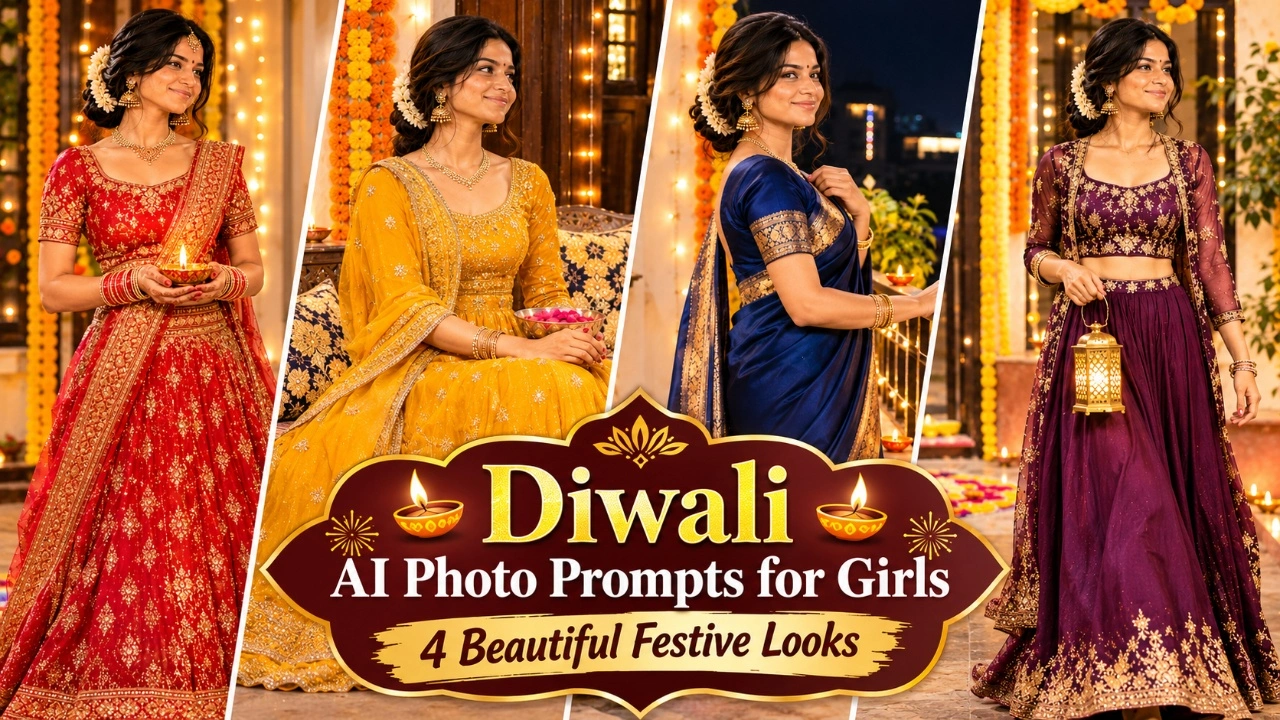
Diwali is a perfect time to try beautiful traditional outfits, festive hairstyles, and different photo poses. From colourful lehengas and silk sarees to stylish suits, girls can create many types of Diwali photos using AI image prompts. You can choose a simple festive look, a royal traditional style, or a modern ethnic outfit for your pictures. Adding diyas, fairy lights, rangoli, and flowers can make the photos look more connected to the festival.
These 4 Diwali AI photo prompts for girls include different outfits, poses, and backgrounds. Each prompt gives you a separate photo idea, so you can create more than one festive picture without repeating the same style. Upload your own clear photo and use the prompts with your preferred AI image generator. The instructions also ask the AI to keep your original face and natural features unchanged.
1. Red Lehenga Diwali AI Photo Prompt
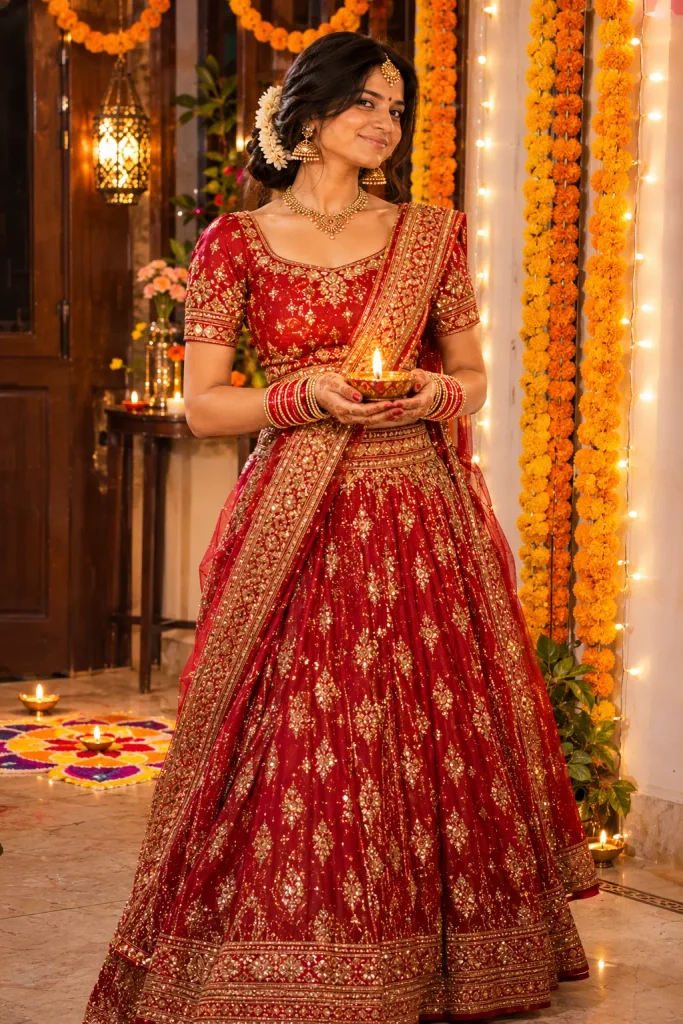
A red lehenga is a classic choice for a Diwali photoshoot. You can create a festive picture wearing a red embroidered lehenga with golden work, matching earrings, bangles, and a beautiful hairstyle. A decorated home with glowing diyas and flower garlands can give the picture a traditional Diwali look.
For this photo, stand near a decorated wall while holding a small diya carefully in both hands. Keep your body slightly turned toward the camera and look directly at it with a gentle smile. The warm light from the diya should fall naturally on your face and outfit. Use a full-body or three-quarter camera view to show the lehenga properly.
Use the uploaded reference photo as the main identity reference and create a highly realistic Diwali festive portrait of the same girl. Keep her original face exactly as it appears in the reference image. Do not change her facial structure, eyes, eyebrows, nose, lips, cheeks, jawline, forehead, skin tone, or natural facial marks. Do not replace her face with another person's face. Do not apply heavy beauty filters or change her natural age. The final image must clearly look like the same person from the uploaded photo.

Dress her in a beautiful traditional red lehenga with detailed golden embroidery. The lehenga should have a rich red colour with small gold patterns spread naturally across the skirt. Add a matching blouse with short sleeves, a neat neckline, and fine embroidery along the edges. The skirt should look full but not oversized, with natural fabric folds around the waist and lower body. Add a red dupatta with a golden border, placed over one shoulder and falling naturally along her side. The fabric should look like real festive clothing, with visible stitching, soft folds, and natural movement.

Add traditional accessories that match the outfit. She should wear gold jhumka earrings, a delicate necklace, red and gold bangles, and a small maang tikka. Add a small red bindi if it suits the reference photo. Keep the jewelry balanced and realistic rather than adding too many ornaments. Her hairstyle should be neat and suitable for a Diwali celebration. Use a soft open hairstyle or a low bun, depending on what looks natural with the reference photo. Do not change her natural hairline or make the hair look artificial.

Place her inside a beautifully decorated Indian home during Diwali. The background should include a traditional wall decorated with marigold flower strings, small glowing diyas, and warm fairy lights. Add a colourful rangoli on the floor near the wall. Place a few brass lamps around the setting, but keep them away from her feet and clothing. The decorations should look like a real home prepared for Diwali, not a wedding stage or a palace.

Ask her to stand near the decorated wall with her body turned slightly toward the camera. She should hold a small lit diya with both hands at waist level. Her fingers should gently support the diya from underneath without covering its shape. Keep her elbows relaxed and her shoulders natural. Her head should face the camera, and she should have a soft, happy expression. The pose should look like a real festive photograph taken at home.

The diya should have a small natural flame. Its warm light should gently brighten her hands and the lower part of her face. Do not make the flame too large or add unrealistic light effects. The light from the diya should blend with the warm fairy lights in the background. Keep the shadows soft and make sure the red lehenga and gold embroidery remain clearly visible.

Use a medium-full-body camera frame. Show her from the head to around the knees or full length if the setting allows. Keep the lehenga skirt, blouse, dupatta, jewelry, and diya visible. Use an eye-level camera angle so the photograph looks natural. Keep her face in sharp focus and allow the background lights to appear slightly soft.

Use warm festive colours such as red, gold, orange, and soft yellow. Do not make the colours too bright or oversaturated. The skin should have a natural texture, the hair should show individual strands, and the clothing should have realistic folds. The background should remain detailed enough to show the Diwali decorations without taking attention away from the girl.

Make sure the diya is held correctly, with natural fingers and a believable wrist position. Do not create extra fingers, missing fingers, duplicate hands, or distorted jewelry. The lehenga should fit naturally around the body. The dupatta should not pass through her arm or shoulder. Keep the body proportions realistic.

The final image should look like a professional Diwali photoshoot taken in a decorated Indian home. It should feel festive, warm, and traditional while keeping the girl's original face unchanged. Generate one complete photograph only. Do not add text, captions, logos, borders, stickers, or watermarks. Do not create a collage or change the person's identity.
2. Yellow Anarkali Suit Diwali AI Photo Prompt
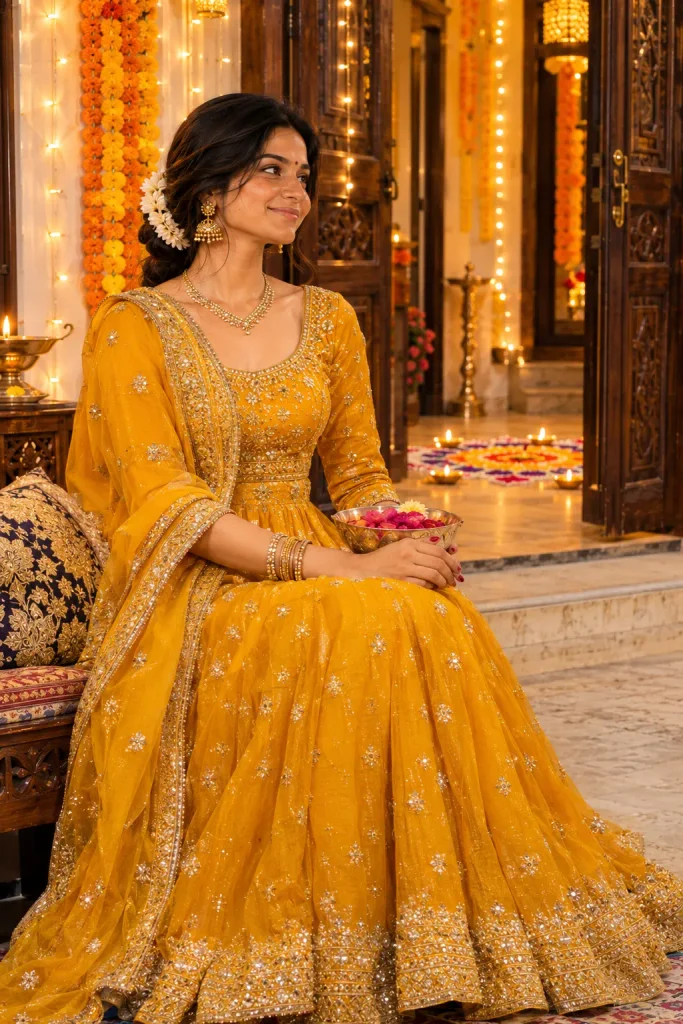
A yellow Anarkali suit can give your Diwali picture a simple and graceful festive look. Choose a bright yellow outfit with light embroidery, matching earrings, and a flowing dupatta. A home entrance decorated with flowers and lanterns can make a lovely background for this style.
For this photo, sit on a decorated wooden bench or a low traditional seat while holding a small bowl of flower petals. Keep one hand resting naturally on your lap and use the other to hold the bowl. Look slightly toward the side instead of directly at the camera. This sitting pose will create a different look from the traditional standing Diwali portrait.
Create a realistic Diwali portrait of the girl using the uploaded reference photo. Keep her face and identity exactly the same as in the original image. Do not change her eyes, nose, lips, jawline, cheeks, skin tone, forehead, or other facial features. Do not create a new face or make her look like a different person. Keep her natural age, facial shape, and skin details. Avoid heavy makeup filters, artificial skin smoothing, or unnecessary changes to her appearance.

Dress her in a beautiful mustard-yellow Anarkali suit with fine golden embroidery. The suit should have a fitted upper part and a flowing lower section that spreads naturally around her legs while she sits. Add small embroidered patterns near the neckline, sleeves, and lower border. The fabric should look like soft silk or a festive traditional material. Give her a matching yellow dupatta with a thin golden border. Place the dupatta neatly over one shoulder and allow it to fall naturally beside her body.

Add simple festive jewelry, including gold jhumka earrings, a delicate necklace, and matching bangles. A small bindi may be added if it suits her natural look. Keep the accessories light so the yellow outfit remains the main focus. Her hair should be styled naturally, either in soft open waves or a simple half-up hairstyle. Keep the hairstyle close to the reference photo and avoid changing her hairline or natural hair texture.

Place her near the entrance of a traditional Indian home decorated for Diwali. The background should show a wooden doorway, marigold flower strings, small hanging lanterns, and warm fairy lights. Add a colourful rangoli near the entrance and a few diyas placed safely along the sides. Include a small decorated table or traditional wooden seat near the doorway. The background should look like a real home prepared for the festival.

Make her sit comfortably on a low wooden bench or traditional seat. Her body should be turned slightly toward the camera, with her back straight but relaxed. Let the Anarkali fabric spread naturally around her legs. She should hold a small decorative bowl filled with flower petals in one hand, resting it gently on her lap. Her other hand should rest naturally beside the bowl or on her knee. Keep her fingers relaxed and correctly placed.

Turn her head slightly toward the right side of the frame. Her eyes should look toward something outside the frame, with a calm and gentle smile. The expression should feel natural, as if someone has captured a quiet moment during Diwali preparations. Avoid a stiff fashion pose or an exaggerated smile. Her shoulders should remain relaxed, and her sitting position should look comfortable.

Use warm evening lighting from the diyas and fairy lights. Add soft light to her face and the yellow outfit. Keep the yellow fabric bright but natural, without making it look fluorescent. The golden embroidery should show small details and should not appear like shiny plastic. Let the background lights create a soft festive glow while keeping the girl in clear focus.

Use a three-quarter camera angle from slightly in front of her. Frame the image from the head to below the knees so the sitting pose, outfit, dupatta, and flower bowl are visible. Keep the camera at a natural height rather than using an extreme high or low angle. The background should be slightly blurred, but the doorway, flowers, and lights should still be recognizable.

Pay attention to the sitting pose and clothing. The Anarkali skirt should spread naturally without strange folds. The dupatta should rest on her shoulder and lap without passing through her body. The bowl should have a clear shape, and the flower petals should look like real flowers. Her hands must have natural fingers and normal proportions. Do not add extra arms, duplicate jewelry, or objects floating in the scene.

Use yellow, gold, orange, and warm brown as the main colours. Keep the skin tone natural and the background balanced. The photograph should look like a real festive portrait taken during Diwali, with clear clothing details and a peaceful mood.

Generate one high-quality photograph with the girl sitting near the decorated entrance. Keep her original identity unchanged and make the scene look natural. Do not add text, captions, logos, borders, stickers, or watermarks. Do not create a collage or multiple versions in one image.
3. Royal Blue Saree Diwali AI Photo Prompt
A royal blue saree with a golden border is a good choice for girls who prefer a traditional saree look. You can pair it with gold earrings, bangles, and a matching blouse. A balcony decorated with fairy lights and diyas can create a beautiful setting for an evening Diwali photo.
For this picture, stand near the balcony railing and gently adjust your saree pallu with one hand. Keep your other hand resting on the railing. Turn your face slightly toward the camera while looking over your shoulder. This pose will show the saree from a different angle and create a natural festive portrait.
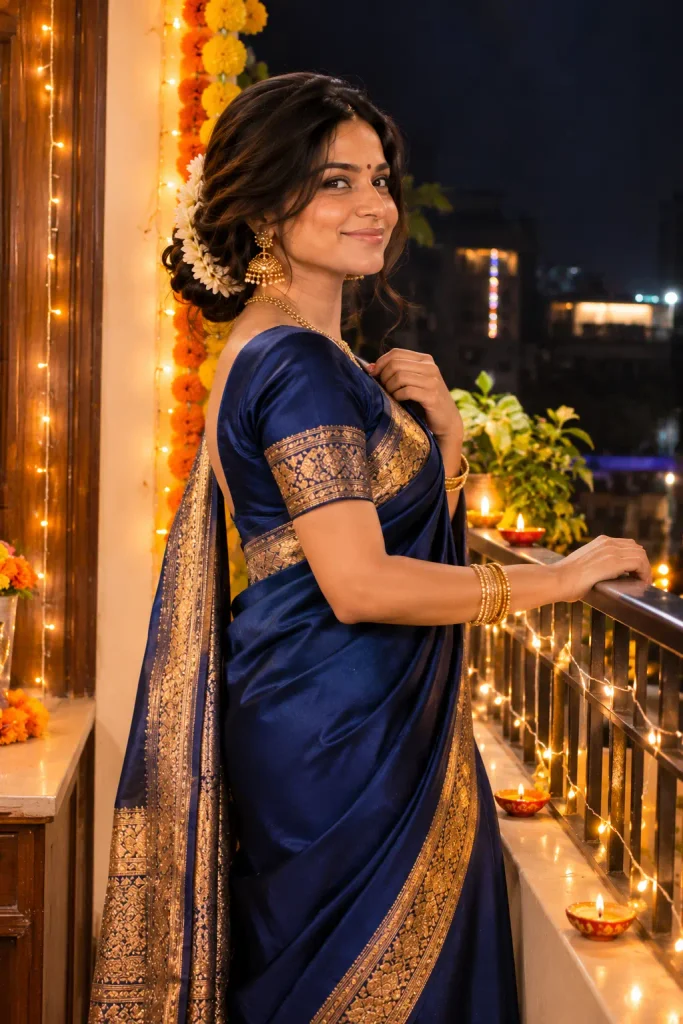
Create a photorealistic Diwali evening portrait using the uploaded reference photo of the girl. Keep her original face and identity unchanged. Match the facial structure, eyes, nose, lips, jawline, cheeks, forehead, skin tone, and natural facial details from the uploaded image. Do not replace her face, create a different person, or apply strong beauty filters. The result should clearly look like the same girl from the reference photo.

Dress her in a royal blue silk saree with a fine golden border. The saree should have a rich blue shade with small gold details along the border. Add a matching blouse with a neat neckline and short sleeves. The blouse should fit naturally, with realistic fabric folds around the shoulders and waist. Place the saree pallu over one shoulder and allow it to fall behind her in a natural way. Keep the saree drape neat and traditional, with realistic pleats and fabric texture.

Add traditional gold jewelry, including medium-sized earrings, a delicate necklace, and a few gold bangles. A small bindi and simple makeup can complete the festive look. Keep the makeup natural and do not change the girl's facial features. Her hairstyle should be neat, with soft open hair or a low bun. Follow the reference photo for her natural hair length and texture.

Set the photograph on a home balcony decorated for Diwali. Add warm fairy lights along the railing, a few small diyas placed safely on the ledge, and flower decorations near the balcony entrance. Show a dark evening sky in the distance. The background may include soft views of nearby homes with a few distant festive lights, but do not make the scene look like a city advertisement or a fireworks poster.

Ask her to stand beside the balcony railing with her body turned slightly away from the camera. One hand should rest gently on the railing, with her fingers relaxed and naturally placed. Her other hand should lightly hold the edge of the saree pallu near her shoulder. Do not make her pull the fabric tightly. Keep her shoulders relaxed and her posture balanced.

Turn her head over one shoulder toward the camera. Her eyes should look directly at the camera, and her expression should be calm with a small natural smile. Her body should remain slightly angled so the saree drape and golden border are visible. This should look like a candid moment during a Diwali evening, not a stiff studio pose.

Use warm light from the fairy lights and diyas. Let the light fall softly on her face, shoulder, and saree border. Keep the royal blue colour rich and clear. The gold details should reflect a little light without looking too shiny. Add natural shadows along the saree folds and around the balcony railing. Keep the skin tone balanced and avoid strong orange or blue colour filters.

Use a three-quarter body camera frame, showing her from the head to around the knees. The balcony railing should be visible beside her, and the fairy lights should form a soft background. Keep her face and upper body in sharp focus. Use a natural portrait lens look with a slightly blurred background. Do not crop the saree pallu or cut off her head.

Make sure the hand resting on the railing looks natural, with normal finger lengths and a realistic wrist position. The other hand should hold the saree pallu without merging with the fabric. Keep the saree pleats realistic and ensure the pallu follows the natural direction of gravity. Do not add extra fingers, duplicate hands, distorted arms, or unnatural body proportions.

Use royal blue, gold, warm yellow, and dark evening blue as the main colours. The overall image should look like a real Diwali photoshoot at home. Keep the decorations simple, the lighting natural, and the girl's original face unchanged. Avoid artificial glow, plastic skin, excessive blur, or unrealistic fireworks.

Generate one complete high-resolution photograph of the girl in a royal blue saree on a decorated balcony. Do not add text, captions, logos, borders, stickers, or watermarks. Do not create a collage or split-screen image.
4. Indo-Western Diwali Outfit AI Photo Prompt
If you want a modern festive look, try an Indo-Western outfit for your Diwali photo. A stylish long skirt with an embroidered crop top or a festive sharara set can give your picture a fresh look. You can add statement earrings, a small handbag, and simple makeup to complete the outfit.
For this photo, walk through a decorated courtyard while holding a small lantern in one hand. Let your outfit move naturally as you walk, and turn your head slightly toward the camera. Use a full-body frame to show the complete outfit and the festive background. This pose will look different from the sitting and standing photos.
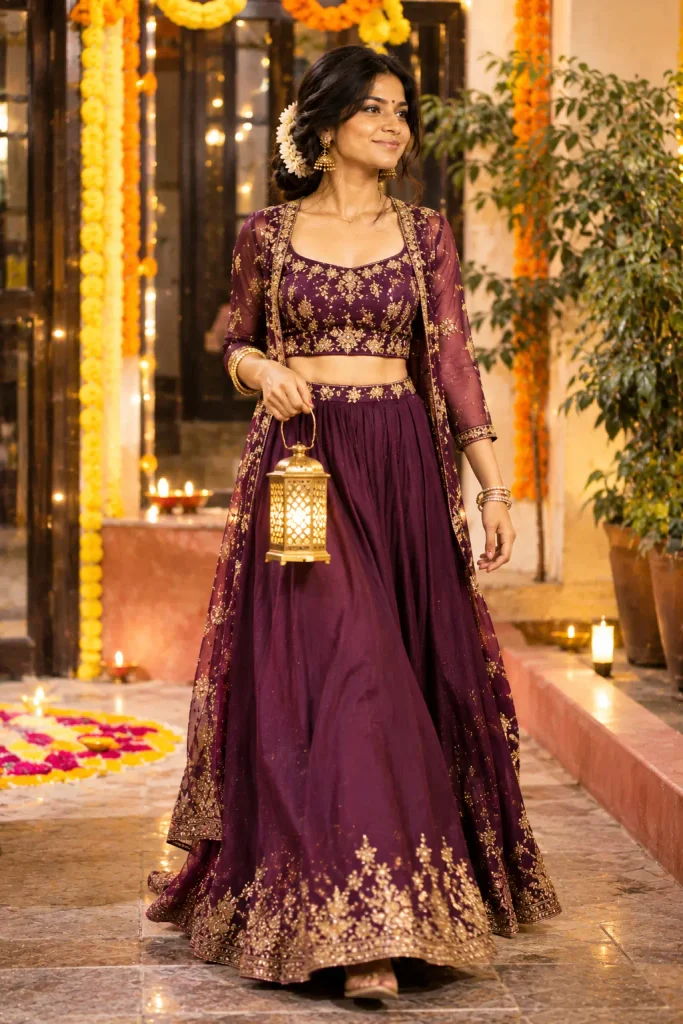
Create a highly realistic Indo-Western Diwali photoshoot using the uploaded reference photo of the girl. Keep her original face and identity exactly the same as in the reference image. Do not change her facial structure, eyes, nose, lips, jawline, skin tone, natural marks, or other facial details. Do not replace her face with another person's face. Avoid artificial beauty filters, excessive skin smoothing, or changes to her natural age. The final image should clearly show the same person from the uploaded photo.

Dress her in a stylish Indo-Western festive outfit. Use a deep purple or wine-coloured long skirt with a matching embroidered crop top. The skirt should have a comfortable fit around the waist and a natural flow around the legs. Add small golden patterns or embroidery near the lower border. The crop top should have a simple festive design with neat sleeves and a natural neckline. Add a light dupatta or a short embroidered jacket if it suits the outfit, but keep the overall look balanced and comfortable.

Choose fabrics that look real, such as silk, georgette, or soft festive fabric. The skirt should show natural folds while she walks. The top should fit properly without looking too tight or artificial. Add a pair of traditional statement earrings, a few bangles, and a small bracelet. Keep the jewelry suitable for a modern Diwali celebration. Avoid adding too many accessories or large pieces that distract from the outfit.

Style her hair in soft open waves or a neat half-up hairstyle. Keep the hairstyle close to the uploaded reference photo. Use light festive makeup with natural skin texture and a soft lip colour. Do not change her original facial features or add a different face shape. Keep her natural appearance visible.

Set the photograph in a decorated Indian courtyard during Diwali evening. Add a colourful rangoli near the entrance, marigold flower strings, small diyas along the walkway, and warm fairy lights around the doorway. Include a few hanging lanterns in the background. The courtyard should look like a real home decorated for the festival. Keep the decorations neat and leave enough space for the girl to walk comfortably.

Show her walking along the decorated courtyard path. Her right foot should be slightly ahead of her left foot, with her body moving forward naturally. She should hold a small decorative lantern in one hand at waist level. The lantern should have a clear shape and a soft light inside it. Her other hand should move naturally beside her body, with relaxed fingers. Do not make both hands hold objects or create a stiff walking position.

Turn her head slightly toward the camera while she continues walking forward. Her expression should be happy and relaxed, with a small natural smile. Keep her shoulders comfortable and her back straight. The skirt should move gently with her walking step, and the fabric should fall naturally around her legs. Do not create dramatic flying fabric or an impossible walking pose.

Use a full-body camera frame that shows her entire outfit, including the skirt and footwear. Position the camera around eye level or slightly below, with enough distance to capture her walking movement. Keep her face sharp and the decorated courtyard visible behind her. Use a natural portrait photography look, with the background slightly soft but still clear enough to show the rangoli, lights, and flowers.

Use warm evening lighting from the diyas, lanterns, and fairy lights. The light should gently brighten her face and outfit. Keep the purple or wine colour rich but natural. The golden embroidery should be visible without looking overly shiny. Add soft shadows under her feet and around the folds of her skirt. Avoid harsh flash, strong colour filters, and excessive glow.

Make the lantern look like a real object with natural proportions. Her fingers should hold its handle correctly. Do not create extra fingers, missing fingers, duplicate arms, or merged hands. Keep her feet and legs in a natural walking position. Make sure the skirt does not pass through her legs and that the fabric movement matches her direction of travel.

The final image should look like a modern Diwali fashion photograph taken at a decorated home. It should combine traditional festival details with a modern outfit and a natural walking pose. Keep the girl's original face unchanged and make the clothes, lighting, and background look realistic. Generate one complete high-resolution photograph. Do not add text, captions, logos, borders, stickers, or watermarks. Do not create a collage or multiple images in one frame.
Pro Tips for a Perfect AI Image
- Upload a clear photo with your face fully visible.
- Mention the exact outfit colour and style you want.
- Use different poses to create different Diwali pictures.
- Add details such as diyas, rangoli, flowers, and fairy lights to match the festival.
- Mention the camera view, such as full-body, waist-up, or three-quarter portrait.
- Ask the AI to keep your original face, skin tone, and natural features unchanged.
Diwali is the perfect time to try beautiful traditional outfits and create festive pictures with different styles. These 4 Diwali AI photo prompts for girls offer a mix of red lehenga, yellow Anarkali, royal blue saree, and modern Indo-Western looks. Each prompt includes a different pose and festive background to make your photos look unique. Choose your favourite outfit, upload a clear reference photo, and create your own Diwali pictures while keeping your natural facial features unchanged.