

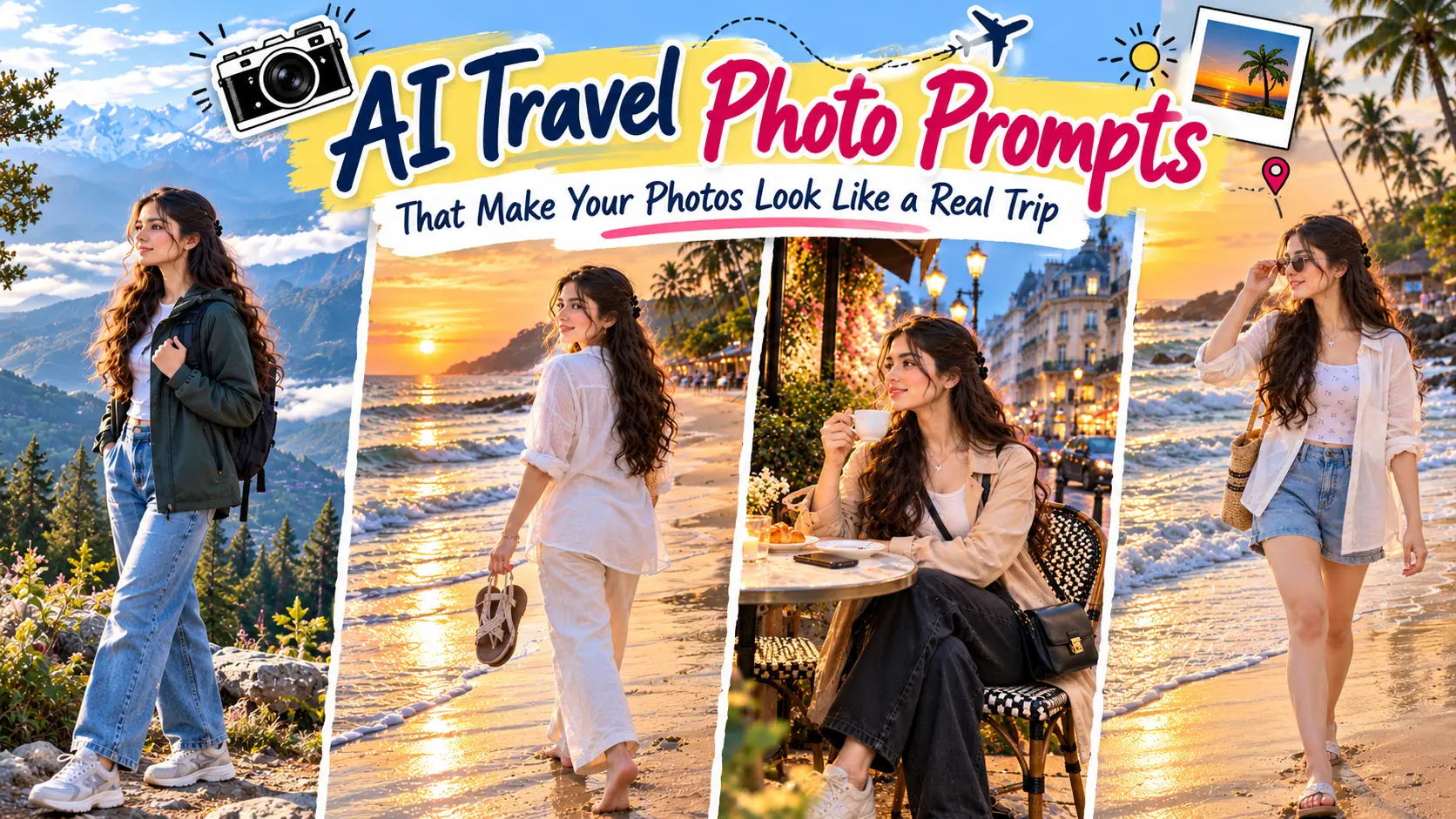
AI travel photo prompts can turn a simple portrait into a travel-style picture with a new location, outfit, pose, and background. You can create photos of boys or girls standing near famous places, walking through city streets, enjoying a mountain view, or relaxing at a beach. The same person can be kept recognizable while the AI changes the travel setting around them.
The four prompts below are made to create clearly different travel pictures. Each one uses a different pose, camera view, location, outfit, and mood. You can use an uploaded photo as the identity reference and ask the AI to keep the person’s face unchanged while creating a natural travel photograph.
Mountain Travel Photo Prompt
A mountain trip photo works well for a calm outdoor picture. The person can stand near a mountain viewpoint while looking toward the valley instead of directly at the camera. A casual jacket, jeans, backpack, and walking shoes can make the picture look suitable for a real trip.
The pose should feel natural, with one hand resting on a backpack strap and the other hand relaxed. The mountains, clouds, trees, and distant valley should remain visible behind the person. Use soft morning light and a wide camera view so the location feels like an important part of the photo.
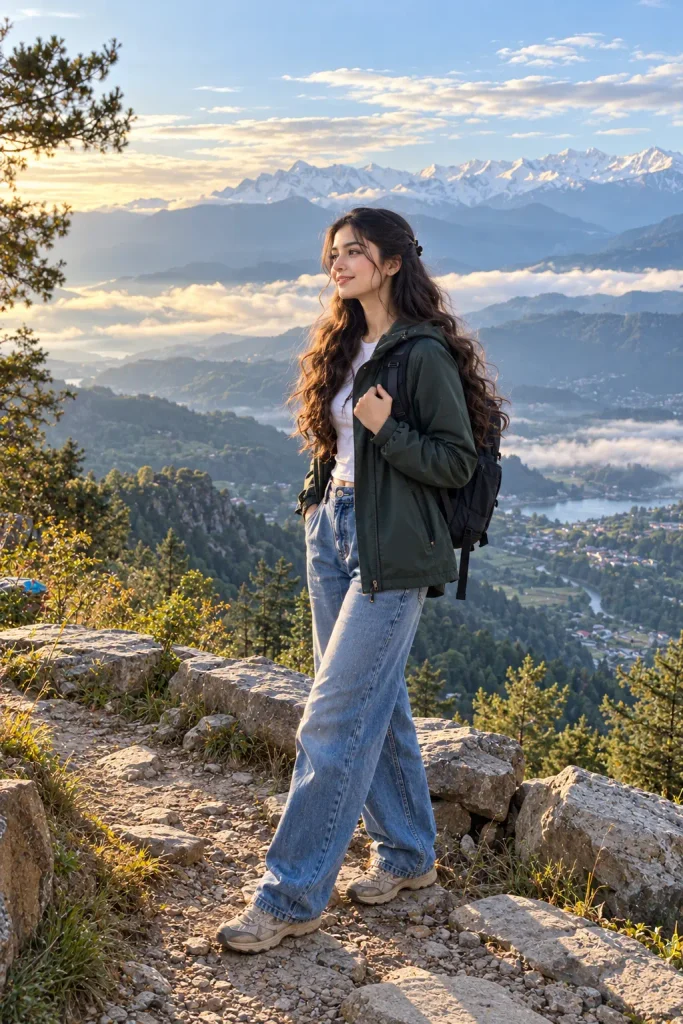
Create a highly realistic travel photograph of a young adult person using the uploaded photo as the main reference for their identity. Keep the person's identity exactly the same as in the uploaded image. Preserve the original facial structure, eyes, eyebrows, nose, lips, jawline, cheeks, skin tone, face shape, natural marks, and other recognizable facial details. Do not replace the face with another person. Do not make the person look like a different model. Keep the natural appearance of the person while changing only the travel setting, clothing, pose, and styling needed for this mountain travel photograph.

Create the scene at a beautiful mountain viewpoint during early morning. The person should be standing on a safe natural viewpoint overlooking a wide mountain valley. The background should contain large green and rocky mountains, layers of distant hills, a few patches of morning mist, tall trees, and a partly cloudy sky. The location should look like a real travel destination rather than a fantasy landscape. Keep the mountains naturally shaped and avoid unrealistic peaks or impossible scenery.

Dress the person in a casual travel outfit suitable for cool mountain weather. Use a simple dark green or navy lightweight jacket over a plain white or light-colored T-shirt. Add comfortable blue jeans and realistic outdoor walking shoes. Include a small travel backpack in a neutral color. The clothing should show natural fabric folds and realistic stitching. Do not make the outfit look like a fashion advertisement.

Give the person a clearly different travel pose. Do not make them stand directly facing the camera with both arms hanging down. Instead, show the person standing slightly sideways with their body facing the mountain valley. One hand should hold the strap of the backpack near the shoulder, while the other hand should rest naturally near the side of the body. One leg should be placed slightly ahead of the other as if the person has just stopped after walking along the viewpoint path. The shoulders should remain relaxed.

The person's head should turn slightly toward the mountains rather than facing directly toward the camera. The eyes should look toward the distant valley. The facial expression should be calm and thoughtful, as if the person is enjoying the view. Keep the expression natural and avoid an exaggerated smile. The pose should look like a real travel moment captured by another person.

The backpack should sit naturally on the person's back. Make sure the shoulder straps follow the body correctly. Do not add extra straps or strange objects. Keep the hands anatomically correct with five fingers on each hand. The hand holding the backpack strap should have a natural grip. Avoid twisted fingers, extra fingers, missing fingers, duplicate hands, or unnatural wrists.

Use soft early morning sunlight coming from one side of the scene. The light should gently touch the person's face, jacket, and hair while creating soft shadows on the other side. The mountains should receive natural morning light, with some distant areas remaining slightly darker. Avoid artificial glowing edges around the person.

Add a narrow mountain path in the foreground leading toward the viewpoint. The path should contain small stones, patches of grass, and natural uneven areas. Do not make the path perfectly clean. Add a few small bushes near the edges. The foreground should help show that the person is actually standing in an outdoor mountain location.

Use a wide travel photography composition with the person placed slightly to one side of the frame. Keep the full body visible from head to shoes. Leave enough space around the person to show the mountain valley, sky, and trees. Use an eye-level camera angle with a slightly wide lens effect, similar to a high-quality travel photograph.

The person should remain sharp while the distant mountains can have a very slight natural softness caused by distance. Do not blur the entire background. The mountain scenery should still be clear enough to understand the location. Keep the sky natural with soft white clouds and pale blue areas.

Keep the colors realistic. Use green and gray tones for the mountains, blue and white for the sky, dark green or navy for the jacket, blue for the jeans, and natural brown and gray tones for the walking path. Avoid neon colors or excessive saturation.

Keep the person's skin texture natural. Do not make the face look plastic or heavily edited. Preserve small natural skin details and the original skin tone from the reference photo. Keep the eyes realistic with natural reflections from the morning light. Avoid excessive makeup or artificial skin smoothing.

Keep the hair natural and suitable for an outdoor mountain trip. Allow a few strands of hair to move slightly in the cool mountain breeze. Do not make every strand perfectly arranged. The hair should have natural texture and realistic volume.

Maintain normal human body proportions. The head, neck, shoulders, arms, hands, waist, legs, and feet must all look natural. Do not make the body extremely thin or unnaturally shaped. Do not create long arms, oversized hands, tiny feet, duplicate limbs, or impossible joints.

Make the clothing respond naturally to the outdoor environment. The jacket should show small folds around the elbows and waist. The T-shirt should sit naturally under the jacket. The jeans should have realistic folds around the knees and hips. The shoes should make contact with the ground correctly.

Add subtle signs of a real mountain environment, such as small rocks, grass, tree branches, distant mist, and soft shadows from nearby plants. Keep these details natural and avoid filling the image with unnecessary objects.

Do not add fantasy buildings, floating mountains, magical light, wings, cartoon effects, unrealistic animals, or artificial scenery. This should look like a real photograph taken during a mountain trip.

Do not add text, logos, watermarks, captions, stickers, borders, or graphic overlays. Do not add unnecessary people near the main subject. If a few distant travelers are visible, they should be very small and naturally placed.

The final image should have a calm travel mood. It should look like the person has stopped during a mountain hike to enjoy the view. The person's body should face the valley, one hand should hold the backpack strap, and the head should turn toward the mountains. This pose must remain clearly different from a normal front-facing portrait.

Use realistic camera detail, natural skin texture, real fabric folds, believable sunlight, natural hair movement, accurate hands, and realistic mountain scenery. Avoid a digital painting or 3D-rendered look.

The final photograph should show the same person from the uploaded reference standing at a mountain viewpoint in a casual travel outfit, with a backpack, walking shoes, and a wide valley behind them. The person should be viewed from a slight side angle, looking toward the mountains while holding one backpack strap. The image should look like a genuine travel photograph taken during a peaceful early morning trip.
Beach Travel Photo Prompt
A beach travel picture can have a more relaxed and fun mood. For this idea, the person should walk along the beach near the water instead of standing in one place. The outfit can be a light shirt with shorts or casual summer clothes, along with sunglasses and simple footwear.
The person can look toward the sea while walking and adjusting their sunglasses with one hand. Waves, wet sand, palm trees, and a warm sky can create a clear holiday setting. A lower camera angle and full-body framing can capture the movement while keeping the beach in view.
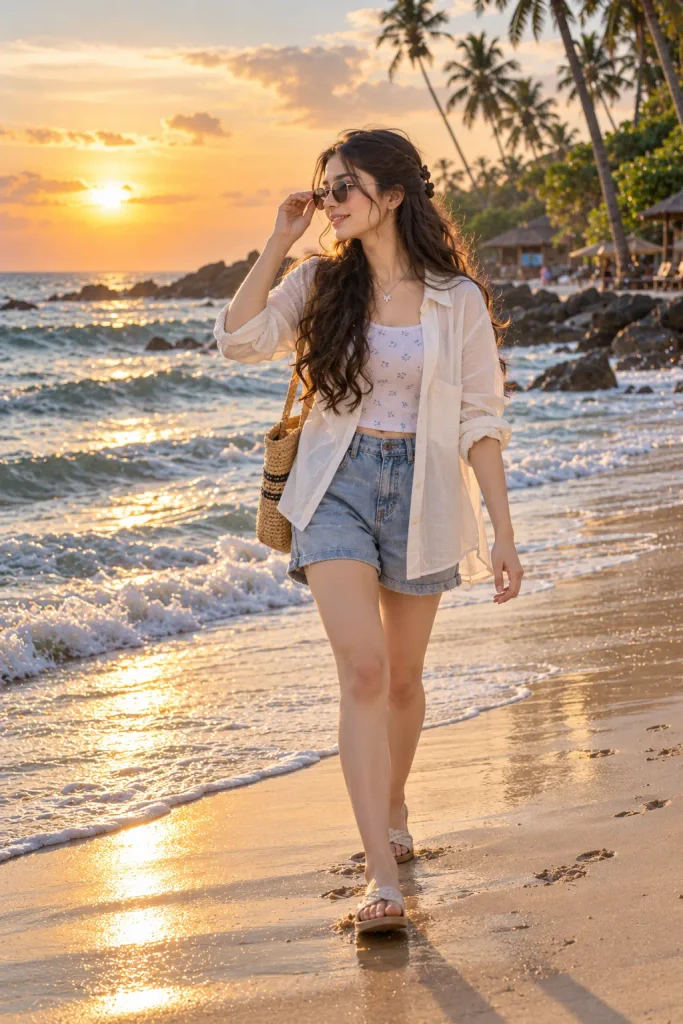
Create a realistic beach travel photograph of a young adult person using the uploaded photo as the main reference for identity. Keep the person's identity exactly the same as the reference image. Preserve the original face shape, facial structure, eyes, eyebrows, nose, lips, jawline, cheeks, skin tone, natural marks, and recognizable features. Do not replace the face with another person. Do not make the person look like a different model. Keep the natural face unchanged while changing the location, clothes, pose, and travel setting.

Place the person on a clean tropical beach during late afternoon. The scene should include a wide sandy beach, gentle ocean waves, a few palm trees, distant rocky areas, and a warm sky with soft clouds. The beach should look like a real travel destination. Avoid fantasy islands or unrealistic water colors.

Dress the person in a relaxed summer travel outfit. Use a loose light-colored linen shirt with the sleeves casually folded, paired with comfortable beige or light blue shorts. Add simple sandals or casual beach shoes. The outfit should look suitable for a warm holiday. Add a pair of sunglasses, but make sure the sunglasses do not cover the entire face or hide the person's identity.

Give the person a completely different pose from the mountain image. Show the person walking naturally along the edge of the water rather than standing still. One foot should be stepping forward while the other remains slightly behind. One hand should gently adjust the sunglasses near the side of the face, while the other arm hangs naturally beside the body. Keep the shoulders relaxed and the body slightly turned toward the sea.

The person's head should turn toward the ocean. Their eyes can look toward the water through the sunglasses. The expression should be relaxed and slightly happy, as if enjoying a peaceful holiday. Do not make the person pose directly toward the camera.

Make the walking movement realistic. The feet should make natural contact with the wet sand. A small wave can reach close to the person's shoes without covering the legs. Show a few natural footprints behind the person. The footprints should follow the direction of movement and should not appear randomly.

Use warm late-afternoon sunlight coming from behind and slightly to the side of the person. Create a soft warm edge of sunlight on the hair and shoulders without making the person glow. The face should still have enough light to remain visible. Keep the shadows soft and realistic.

Show the ocean extending toward the horizon. The water should have natural blue and green tones with small white waves. Avoid making the sea extremely bright blue. Add realistic reflections of the sky on the wet sand.

Include a few palm trees in the background, placed naturally rather than forming a perfect line. Add a simple wooden beach path or small beach hut far in the background if needed, but keep these elements subtle. The person should remain the main subject.

Use a full-body travel photograph with a slightly low camera angle. The camera should be positioned several steps away from the person so the entire body and surrounding beach are visible. Keep the horizon straight and natural. Do not distort the person's body because of the wide view.

Use realistic depth. Keep the person sharp while the far beach and distant palm trees can become slightly softer. The water should remain clear enough to recognize. Avoid heavy background blur.

Keep the colors natural and warm. Use cream, white, beige, light blue, and soft brown for the clothing and beach. Use natural blue and green for the sea and palm trees. Use warm gold and pale orange in the late-afternoon sky. Avoid neon colors and excessive saturation.

Keep the person's skin texture natural and consistent with the reference image. Do not make the skin extremely smooth or artificially tanned. Preserve the person's natural skin tone. The sunlight can create a warm tone on the skin, but it must remain believable.

Keep the hair natural and slightly affected by the sea breeze. A few strands can move across the side of the face. Do not make the hair perfectly still. The sunglasses should sit correctly on the face and should not merge with the eyes, nose, or hair.

Maintain realistic human proportions. Keep the head, neck, shoulders, arms, hands, legs, knees, feet, and body size natural. The hand adjusting the sunglasses should have five fingers with a realistic grip. Do not create extra fingers, missing fingers, duplicate limbs, twisted wrists, or impossible joints.

Make the clothing move naturally while the person walks. The linen shirt should show soft folds and slight movement from the sea breeze. The shorts should fit naturally. The sandals should sit correctly on the feet.

Add realistic beach details such as small shells, tiny stones, wet sand, footprints, gentle waves, and soft shadows. Do not add too many objects. Keep the scene clean and believable.

Do not add fantasy elements, magical lights, floating objects, giant waves, artificial palm trees, or unrealistic backgrounds. The beach should look like a real place photographed with a good camera.

Do not add text, logos, watermarks, captions, borders, stickers, or graphic effects.

The overall mood should be relaxed, casual, and happy. The photograph should feel like a real holiday moment rather than a planned studio portrait. The person's walking pose, sea breeze, moving shirt, and footprints should make the picture feel natural.

Use realistic camera detail, natural skin texture, accurate hands, real cloth folds, believable sunlight, realistic water, and natural shadows. Keep the image sharp without making it overly processed.

The final image should show the same person from the uploaded reference walking along a tropical beach in a light summer outfit. One hand should adjust the sunglasses while the other hangs naturally. The person should look toward the sea as gentle waves reach the wet sand. Palm trees, ocean water, footprints, and a warm late-afternoon sky should complete the travel scene. The final result must look like a real holiday photograph.
City Travel Photo Prompt
A city travel picture can give a more modern look. The person can be photographed on a busy city street near famous buildings, shops, signs, and cars. A casual jacket, shirt, trousers, and sneakers can fit the setting.
For a different pose, show the person sitting at an outdoor cafe and looking across the street while holding a coffee cup. The camera can capture the person from the side with the city visible behind them. Evening lights and soft street lighting can give the image a natural travel feel.
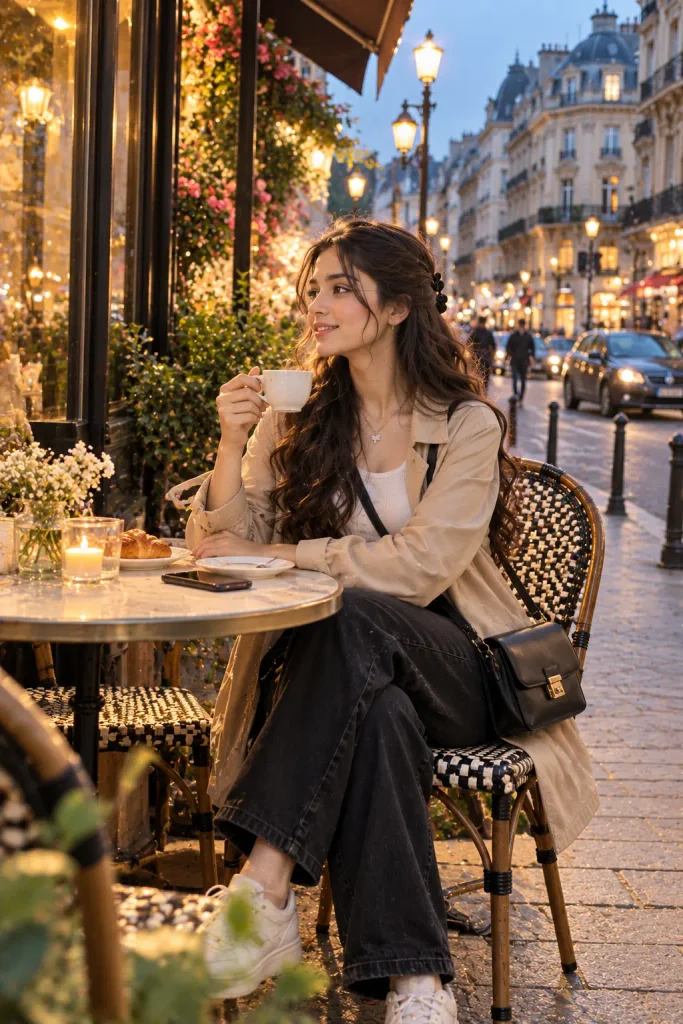
Create a realistic city travel photograph of a young adult person using the uploaded photo as the main reference for identity. Keep the person's identity exactly the same as the uploaded image. Preserve the facial structure, face shape, eyes, eyebrows, nose, lips, jawline, cheeks, skin tone, and natural marks. Do not replace the face with another person. Do not make the person look like another model. Keep the original facial identity clearly recognizable.

Place the person at an outdoor cafe on a lively city street during early evening. The city should look like a real international travel destination, with classic buildings, modern shop fronts, street signs, parked cars, buses or taxis in the distance, pedestrians, and warm lights beginning to turn on. Do not use a specific famous landmark unless it can be shown naturally. The focus should remain on the person and the travel mood.

Dress the person in a smart casual travel outfit. Use a neutral jacket over a plain shirt, comfortable dark trousers, and clean white or gray sneakers. Add a small crossbody travel bag resting naturally across the body. The outfit should look comfortable for walking around a city. Keep the fabric realistic with natural folds.

Give the person a completely different pose from the previous two prompts. Instead of standing or walking, show the person sitting at a small outdoor cafe table. The chair should be turned slightly toward the street. The person's body should face partly toward the table while the head turns toward the city street. One hand should hold a coffee cup near the table, while the other hand should rest naturally on the table beside a phone.

Keep the coffee cup correctly held. The fingers should wrap naturally around the cup without extra fingers. The other hand should rest comfortably with relaxed fingers. Do not make the hands stiff or perfectly arranged.

The person should look across the street rather than directly into the camera. Give them a relaxed expression with a small natural smile or thoughtful look. The pose should feel candid, as if someone captured the person while they were taking a break during a city trip.

Place a small cafe table in front of the person. Add a simple coffee cup, a small plate, and a smartphone placed naturally on the table. Do not fill the table with too many objects. The cafe chair should be realistic and support the person's body correctly.

Show the city street behind the person. Include buildings with different heights, shop windows, a few pedestrians, parked cars, and warm street lights. Keep distant people slightly blurred because they are not the main subject. Make sure no random faces become unusually sharp.

Use early evening lighting. The sky should have a soft blue-gray color while warm lights begin to appear from shops, cafes, and street lamps. The main light on the person's face should come from a nearby cafe light and soft remaining daylight. Keep the lighting balanced and realistic.

Use a side-angle camera view at about eye level. Frame the person from the head to below the waist while showing enough of the cafe table and city street. The camera should be positioned slightly to the side so the person's profile and travel setting are both visible.

Use realistic city photography with moderate background blur. Keep the person's face, hands, coffee cup, and clothing sharp. Allow the distant buildings, cars, and people to become softer with distance, but keep enough detail to show that the scene is a busy city street.

Keep the color palette natural. Use neutral clothing colors such as beige, black, gray, white, or navy. Add warm yellow and orange lights from shops and street lamps. Keep the buildings in natural gray, cream, brown, and brick colors. Avoid neon colors unless a small real shop sign naturally contains one.

Keep the person's skin natural and consistent with the uploaded photo. Show normal skin texture and natural facial details. Do not apply heavy smoothing or make the person look like a fashion model.

Keep the hair natural and suitable for a city travel photo. The hairstyle should remain realistic, with a few loose strands if appropriate. Do not make the hair overly perfect.

Maintain normal human proportions. The seated position must be anatomically correct. Keep the knees, legs, arms, hands, shoulders, and head in believable positions. Do not create extra fingers, missing fingers, duplicate limbs, strange elbows, or twisted wrists.

Make the jacket, shirt, trousers, and bag interact naturally with the seated position. The jacket should show folds near the elbows and waist. The trousers should fold naturally around the knees. The crossbody strap should pass correctly across the body.

Add small city details such as reflections in cafe windows, soft light on parked cars, street signs, building textures, and small shadows on the pavement. Keep these details realistic and do not overload the background.

The scene should look like a real city visited by a traveler. Avoid making every building look perfect or identical. Add small differences in windows, signs, and street furniture to make the setting feel real.

Do not add fantasy buildings, magical lights, floating objects, cartoon characters, or unrealistic city structures. Do not turn the city into a movie set.

Do not add text, logos, watermarks, captions, borders, stickers, or graphic effects. Any real-world signs in the background should remain subtle and should not dominate the image.

The overall mood should be relaxed and modern. The person should look like a traveler taking a short break at a city cafe after exploring the streets. The coffee cup, phone, crossbody bag, and evening city lights should support the travel story.

Use realistic camera detail, natural skin texture, accurate hands, real clothing folds, believable lighting, realistic city depth, and natural shadows. Avoid a digital painting or 3D-rendered appearance.

The final image should show the same person from the uploaded photo sitting at an outdoor cafe on a city street during early evening. The person should hold a coffee cup in one hand while the other rests naturally on the table near a phone. Their body should face the cafe table slightly while their head turns toward the city street. Warm lights, buildings, cars, pedestrians, and cafe details should appear naturally in the background. The final result should look like a genuine city travel photograph.
Sunset Beach Travel AI Photo Prompt
A sunset beach photo can give the travel collection a warmer and more relaxed look. Instead of standing or sitting, this prompt shows the person walking along the shoreline while carrying their shoes in one hand. The person can wear a light summer outfit, with the sea, wet sand, palm trees, and orange evening sky creating the travel setting.
The pose is different from the earlier prompts because the person is walking away from the camera while looking back naturally over one shoulder. This creates a candid travel moment rather than a direct portrait. Keep the full body visible, with footprints behind the person and soft sunlight reflecting on the water.
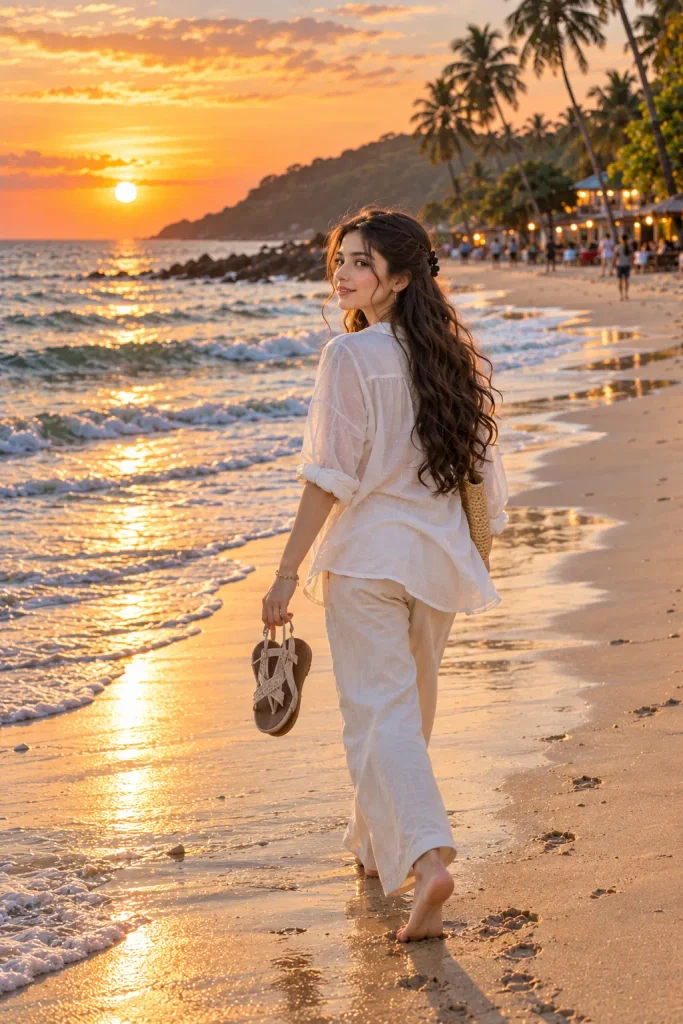
Create a realistic travel photograph of a young adult person using the uploaded photo as the main reference for their identity. Keep the person's identity exactly the same as in the uploaded image. Preserve the original facial structure, face shape, eyes, eyebrows, nose, lips, jawline, cheeks, skin tone, natural marks, and other recognizable facial features. Do not replace the person's face with another person. Do not make the person look like a different model. Do not change the natural identity just to fit the travel setting. Keep the face clearly recognizable as the same person from the uploaded reference photo.

Create a peaceful beach travel scene during sunset. Place the person walking along the edge of the ocean on a wide sandy beach. The beach should look like a real holiday destination with natural wet sand, gentle waves, a few palm trees, distant hills or rocks, and a wide open evening sky. The sun should be low near the horizon, creating warm golden light across the water and sand. Keep the entire setting realistic and avoid fantasy scenery.

Dress the person in a comfortable summer travel outfit suitable for a beach holiday. Use a loose white or cream-colored linen shirt with the sleeves slightly folded and comfortable beige or light-colored trousers or shorts, depending on the person's style. Keep the outfit simple and natural. The fabric should have realistic folds and should move slightly with the sea breeze. Add a small casual travel bracelet or simple watch if it fits naturally with the outfit. Do not add excessive accessories.

Give the person a completely different travel pose. Show the person walking away from the camera along the shoreline instead of standing or sitting. Their body should face away from the camera while their head turns naturally over one shoulder toward the camera. One arm should hang relaxed beside the body, while the other hand should hold a pair of simple sandals or casual shoes by their straps. The legs should show a natural walking movement, with one foot slightly ahead of the other.

Make the walking pose physically natural. The person's shoulders should remain relaxed, the back should have a normal posture, and the head should turn only as much as a person naturally would while looking back. Do not twist the neck or upper body unnaturally. The arm holding the shoes should hang naturally. The shoes should be positioned at a believable height and should not float in the air.

The person's face should be visible enough from the over-the-shoulder view to recognize the identity from the reference image. Their expression should be relaxed and happy, with a small natural smile. Do not create a dramatic model expression. The person should look as though they casually turned around after walking along the beach.

Keep the person's hair natural and suitable for a beach setting. The sea breeze should move a few strands of hair gently toward the side. Longer hair can move slightly behind the shoulders. Shorter hair should show small natural movement. Do not make the hair perfectly fixed in place. Keep individual hair strands realistic without making them overly sharp.

Use warm golden-hour sunlight as the main light source. Place the sun low behind the person and slightly to one side. The sunlight should create a soft warm edge on the person's hair and shoulders while still keeping the face visible. Add natural highlights to the white shirt and skin without creating an artificial glowing outline.

The wet sand should reflect some of the warm sunset colors. Keep the reflection soft and broken by small waves and footprints. Do not make the entire beach look like a mirror. Add natural changes in sand texture, small shells, tiny stones, and areas where the water has recently moved across the shore.

Show gentle ocean waves reaching toward the person's feet. The water should have small white foam lines and natural blue-gray tones mixed with the warm colors of the sunset. Do not create giant waves. The sea should look calm enough for a relaxed evening walk.

Create natural footprints behind the person. The footprints should begin where the person has already walked and follow the same direction as their movement. Some footprints can be slightly washed by the water. Keep them subtle and realistic. Do not place random footprints in front of the person.

Add several palm trees farther along the beach. They should be naturally spaced rather than arranged in a perfect row. A small beach cafe, wooden hut, or distant beach chairs can appear far in the background if they fit naturally into the setting. Keep these objects small so the person remains the main subject.

Use a wide full-body travel photography composition. Keep the complete person visible from head to feet. Leave enough space around the person to show the shoreline, ocean, sunset, and sky. The camera should be positioned slightly behind the person at about waist-to-chest height, giving a natural travel photograph rather than a studio portrait.

The camera should capture the over-the-shoulder face clearly enough while also showing the direction in which the person is walking. Do not crop the head, hands, feet, or shoes. Keep the person's body proportions accurate. Do not make the head too large compared with the body.

Use a realistic travel camera look with natural depth. The person should remain sharp while the distant beach, palm trees, and hills can become slightly softer because of distance. The sunset should remain detailed enough to show the horizon and clouds. Do not apply excessive background blur.

Keep the sky natural. Use soft orange, golden yellow, pale pink, and light blue tones around the sunset. The colors should blend naturally rather than appearing as strong blocks of color. Add a few thin clouds that catch the warm light. Do not create an extremely bright sun that makes the entire sky white.

Keep the person's skin tone consistent with the uploaded reference photo. The sunset can create a warm light on the skin, but do not change the person's natural complexion. Preserve normal skin texture, small marks, and realistic facial details. Avoid heavy smoothing, artificial beauty filters, or plastic-looking skin.

Make the clothing respond naturally to the sea breeze. The linen shirt should show gentle movement around the sleeves and lower edge. The trousers or shorts should have natural folds around the knees and hips. If the person's feet are visible, make sure they have realistic proportions and natural contact with the wet sand.

The sandals or shoes in the person's hand should look real and correctly shaped. Their straps should be connected properly. The person's fingers should hold them naturally. Make sure both hands have five fingers, with no extra fingers, missing fingers, duplicate hands, twisted wrists, or strange joints.

Maintain realistic body proportions throughout the image. The shoulders, arms, hands, waist, legs, knees, ankles, and feet must all look like normal human anatomy. Avoid unnatural body stretching, extremely thin limbs, oversized hands, or distorted legs.

Use realistic shadows from the person's body and nearby objects. The feet should create small shadows on the sand. The palm trees should cast soft long shadows because of the low evening sun. Keep the shadows consistent with the direction of the sunlight.

Add subtle reflections on the water and wet sand. The person's reflection can appear faintly near the feet if the water has recently covered the sand. Keep the reflection slightly broken and imperfect rather than creating a perfect mirror image.

The overall mood should feel peaceful, relaxed, and natural. The image should look like a real holiday moment captured by a friend while the person was walking along the beach. It should not look like a fashion advertisement or a staged studio photograph.

Do not add fantasy buildings, magical lights, glowing objects, wings, unrealistic animals, floating objects, artificial scenery, cartoon effects, or dramatic movie effects. Keep everything grounded in a real beach travel setting.

Do not add text, logos, watermarks, captions, stickers, borders, frames, or graphic overlays. Do not add unnecessary people close to the subject. If distant beach visitors appear, keep them small, natural, and softly visible in the background.

Keep the image suitable for a travel blog, Instagram post, or personal vacation photo. The person should look like a real traveler enjoying the last few minutes of daylight at the beach.

Use realistic camera detail, natural skin texture, believable sunlight, accurate hands, realistic hair movement, natural cloth folds, correct body proportions, real sand texture, gentle ocean waves, and soft sunset reflections.

The final image should show the same person from the uploaded photo walking away from the camera along a beach at sunset. Their body should face the ocean path while their head turns naturally over one shoulder toward the camera. One hand should hold a pair of sandals, while the other arm hangs naturally. Their casual summer clothes should move gently in the sea breeze. Wet sand, footprints, gentle waves, palm trees, and a warm sunset should complete the scene. The final result must look like a genuine travel photograph captured during a real beach holiday.
Pro Tips for a Perfect AI Image
- Use a clear reference photo when you want the person’s face and identity to remain the same.
- Mention the exact location, clothing, weather, and time of day for a more believable travel scene.
- Give every image a different pose instead of changing only the background.
- Describe hand positions clearly because hands can change easily in AI-generated photos.
- Use full-body framing for walking and outdoor travel shots, while medium framing works well for cafe or close travel photos.
- If the result looks artificial, ask the AI to add natural skin texture, real fabric folds, correct body proportions, and realistic lighting.