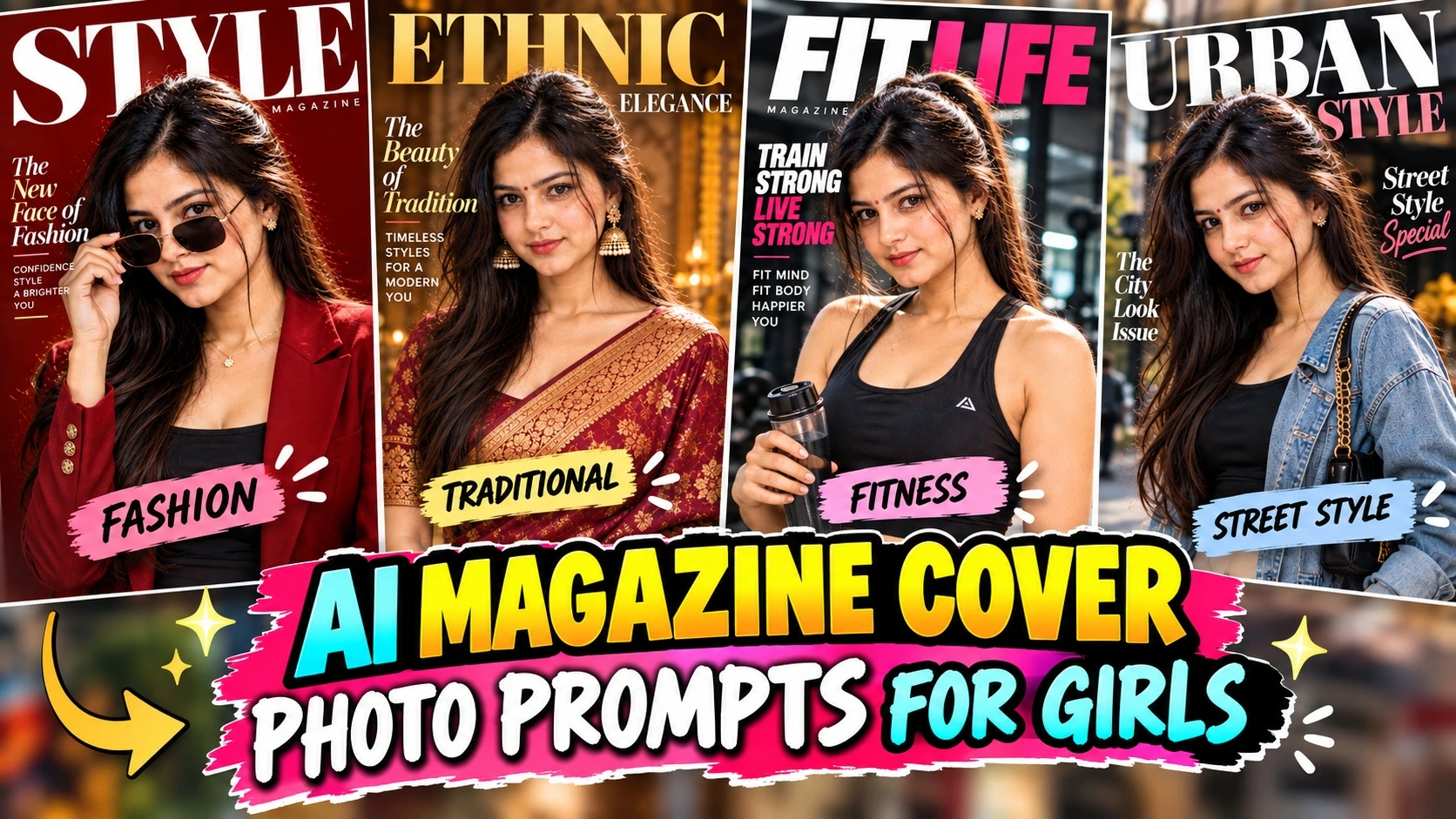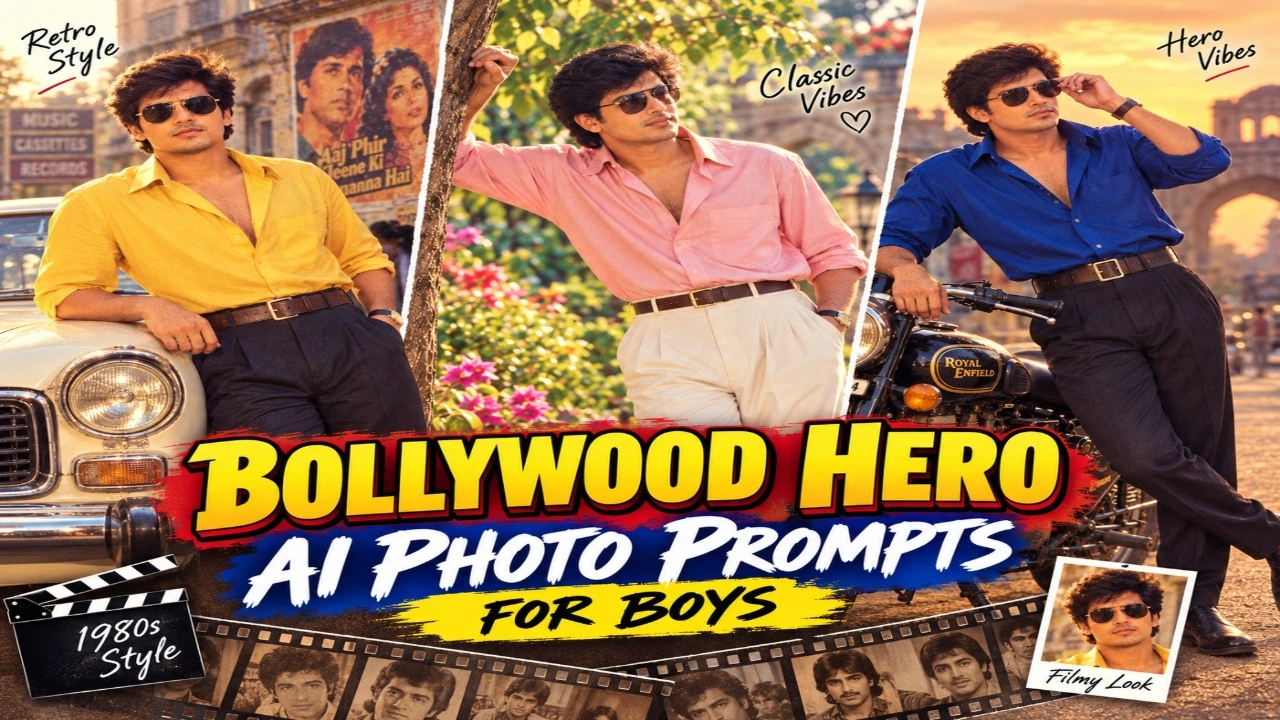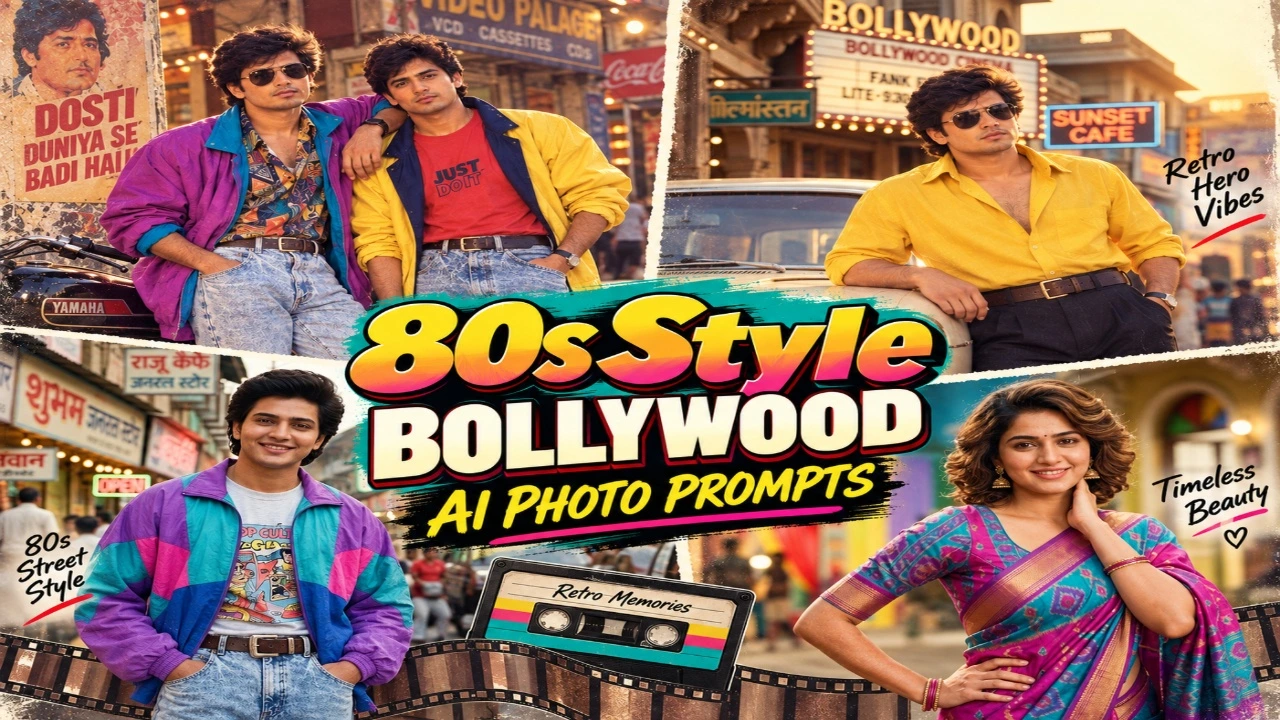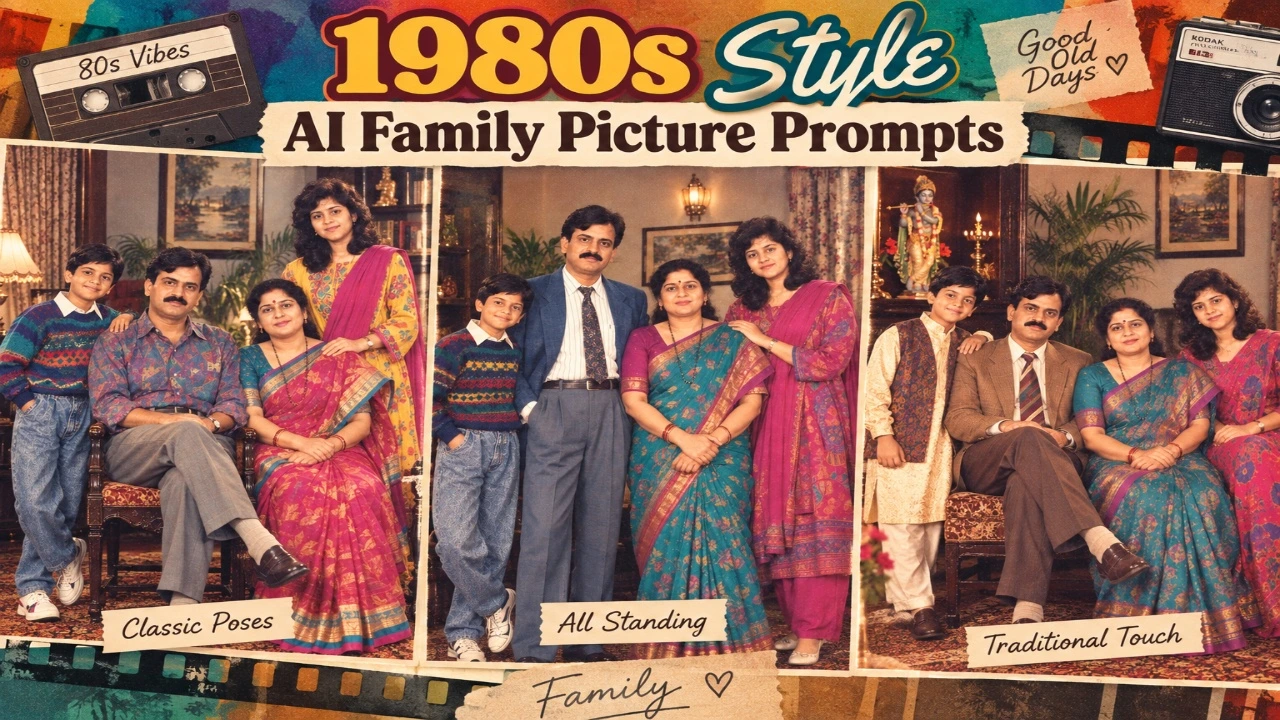

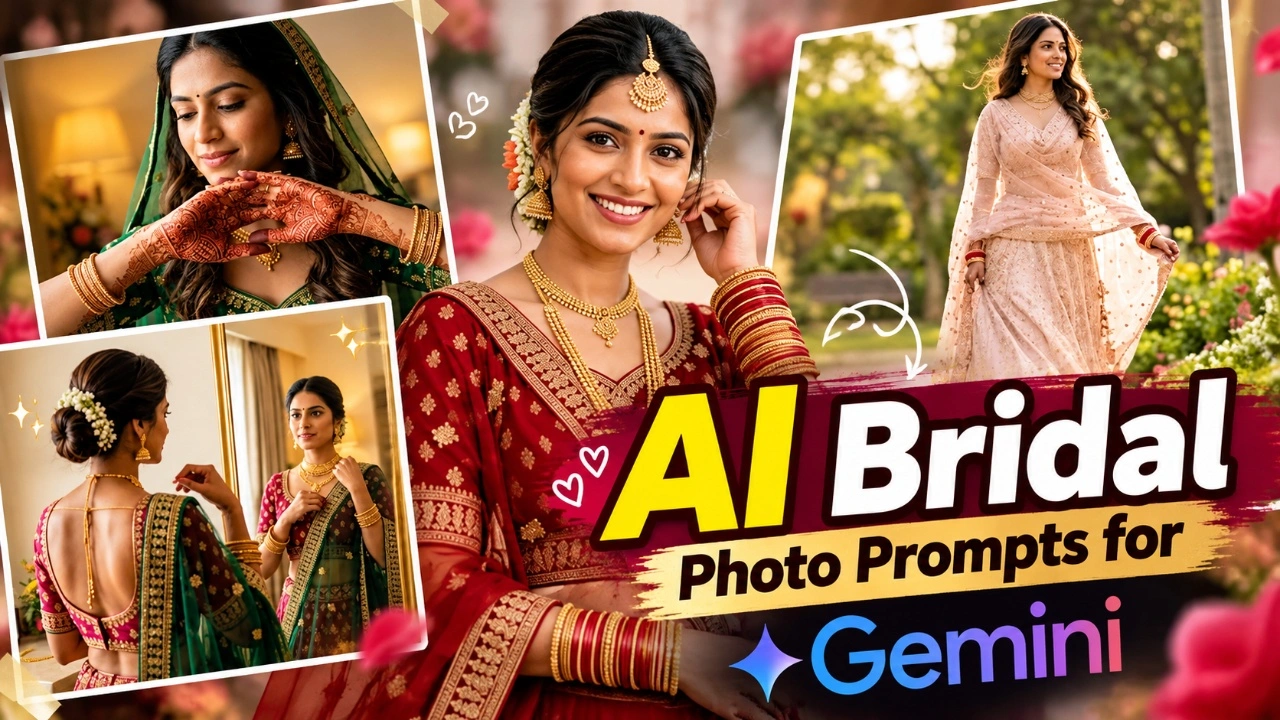
A bridal photo is one of the most special pictures anyone can have. It shows the bride in her best outfit, with her makeup done, her jewelry on, and a happy look on her face. Many people want a bridal photo but do not always get the chance to do a full photoshoot with a real photographer. This is where AI bridal photo prompts for Gemini come in handy. You can upload a normal photo of yourself, add a simple prompt, and Gemini can turn it into a bridal picture that looks like it came from a real wedding shoot. You can change the outfit, the jewelry, the background, the lighting, and even the pose, all without leaving your home.
In this article, we will look at different bridal photo ideas you can try using Gemini. Some ideas show a bride sitting quietly and getting ready, some show her standing in a palace-like hall, and some show her outdoors in soft light. Every idea uses a different pose, a different setting, and a different mood, so you get a full range of pictures instead of the same look again and again. You can pick the ones you like the most, or try all of them one by one. Each prompt below is written in a simple way so you can copy it directly and use it with your own photo in Gemini.
Traditional Red Lehenga Bridal Portrait
This idea gives you a classic bridal look in a red lehenga, the kind of outfit most brides wear on their big day. The photo shows the bride standing in a simple, clean space that looks like part of a wedding hall, with soft light falling on her face and outfit. This is a good starting point if you want a bridal photo that looks proper and traditional, something you could easily believe was taken during a real wedding function.
The second part of this photo idea is about the small details that make it feel real. The red color of the lehenga should look rich and deep, not too bright or fake. The gold work on the outfit, the bangles on the hands, and the small bindi on the forehead all add to the bridal look. The way the light falls from one side, along with a soft shadow near the face, helps the photo look like a real camera shot instead of a flat drawing.
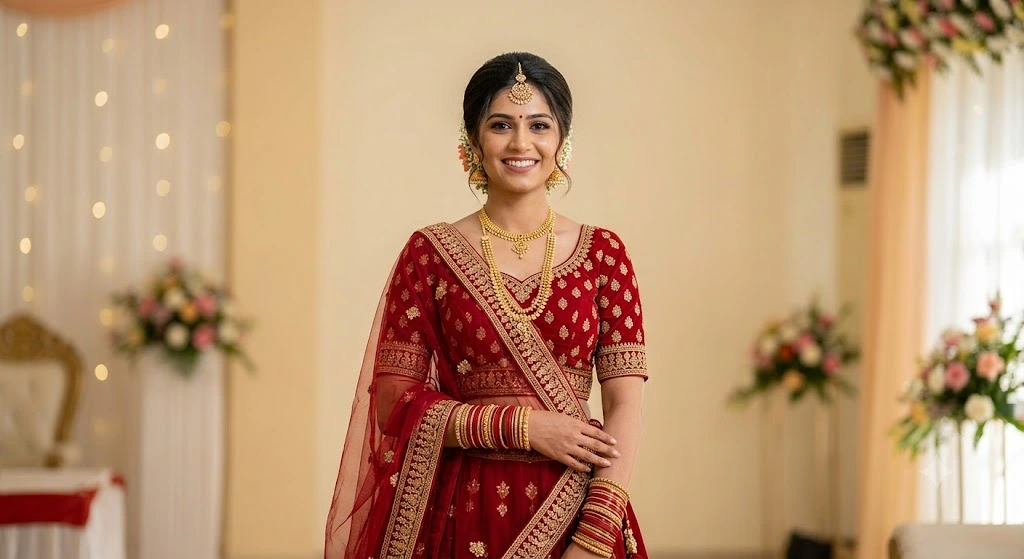
Use the uploaded photo as the main reference for the person. Keep the person's identity exactly the same. Do not change the facial structure, eyes, nose, lips, jawline, skin tone, natural marks, or any other facial feature from the uploaded photo. Only change the outfit, hair styling, jewelry, background, and lighting as described below, while keeping the face fully recognizable as the same person.

The subject is a bride standing in the center of the frame, facing the camera with her body turned very slightly to one side. She stands tall and straight, with her shoulders relaxed and her chin slightly lifted, giving a calm and confident look. Her right hand rests gently near her waist, holding a small part of her dupatta, while her left arm hangs naturally by her side with bangles visible on her wrist. Her head is turned just a little toward the camera, and her eyes look directly into the lens with a soft, warm expression. Her lips are closed with a gentle smile, not too wide, giving a peaceful bridal mood rather than a big laughing expression.

Her hair is styled in a neat bun placed at the back of her head, with a few soft strands left loose near her forehead and ears to keep the look natural rather than too stiff. A small strand of flowers or a simple gajra can be wrapped around the bun for a traditional touch. The hair should have a healthy shine, showing that it has been oiled and set nicely, and there should be no flyaway hair sticking out awkwardly.

She is wearing a red lehenga with heavy gold embroidery running along the border of the skirt and the sleeves of the blouse. The blouse has a round neckline and half sleeves, with fine gold thread work covering most of the fabric. The skirt is full and flows outward slightly, showing layers of fabric that catch the light differently, giving a rich and heavy look typical of bridal wear. A matching dupatta is draped over one shoulder and falls gently down her back, with a light net texture that lets a bit of light pass through it. The colors should stay true to a deep red and gold combination, without looking too orange or too pink.

For jewelry, she wears a traditional gold necklace that sits close to her neck, along with a longer layered necklace that falls just below it. Gold jhumka earrings hang from her ears, matching the necklace design. On her forehead, a small maang tikka rests in the center of her hairline. Red and gold bangles cover both wrists, stacked closely together. A small gold ring sits on one finger, and her hands should look soft and natural, without any stiffness.

The background is a softly lit wedding hall with warm cream and gold walls, slightly blurred so the focus stays on the bride. There may be a hint of decorative flowers or fairy lights in the far background, but they should not be sharp or distracting. The floor beneath her may show a faint reflection of light, suggesting a polished marble or wooden surface.

The lighting comes from the front and slightly to one side, like a soft studio light or a large window letting in daylight. This creates a gentle shadow on one side of her face and body, giving the photo depth without looking harsh. The light should highlight the gold embroidery on her outfit so it sparkles a little, while keeping her skin tone looking natural and even, with no artificial shine or plastic-like smoothness.

The camera angle is a medium shot, showing the bride from roughly the waist up to just above her head, so both her upper body and jewelry are clearly visible. The photo should look like it was taken with a good camera, similar to a professional portrait photo, with a slightly soft and blurred background compared to a sharp, clear subject. Skin texture should look real, with natural pores and a light natural glow rather than an overly smooth, edited look. Fabric folds on the lehenga and dupatta should look soft and natural, following the shape of her body without stiff or unnatural lines.

The overall mood of the photo should feel calm, proud, and traditional, like a bride who feels comfortable and happy in her wedding outfit. The final image should look like a real bridal portrait taken inside a decorated wedding hall, with natural skin, real fabric texture, and soft, warm lighting that makes the red and gold colors stand out clearly.
Bridal Mehndi Hands Close-Up Portrait
This idea moves away from a full body shot and focuses closely on the bride’s hands covered in mehndi design, along with a part of her face in the background. Mehndi is an important part of most weddings, and a close-up photo like this feels personal and detailed, showing off the fine patterns drawn on the hands along with the bangles and rings worn on the big day.
For this photo, the pose is completely different from a standing portrait. The bride is shown sitting, with her hands raised gently near her face, palms turned slightly toward the camera so the mehndi pattern is clearly visible. This close and detailed framing, combined with a soft blur behind her, gives the photo a warm and intimate feeling that is different from a wide, full-length shot.
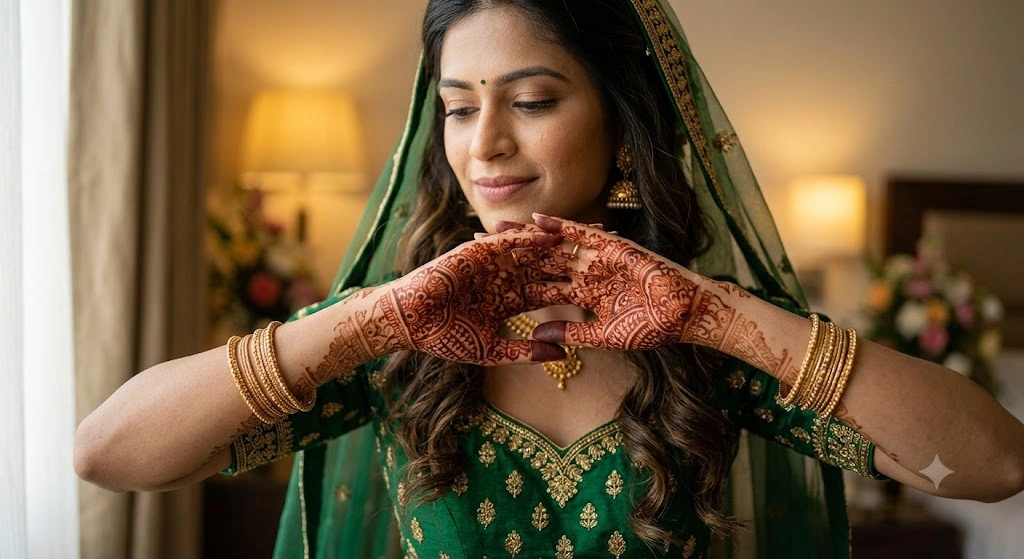
Use the uploaded photo as the main reference for the person's face. Keep the person's identity exactly the same. Do not change the facial structure, eyes, nose, lips, jawline, skin tone, natural marks, or any other facial feature. The face should remain clearly recognizable as the same person, shown partly in the frame while the hands take up most of the focus.

The subject is a bride sitting on a soft chair or low stool, with her body turned slightly to one side. She is captured from a close angle, showing her hands raised near the lower part of her face, with her palms turned gently outward so the mehndi patterns are fully visible to the camera. Her fingers are spread naturally, not stiff or forced, with a slight curve that looks relaxed. One hand is placed slightly above the other, with both hands framing the lower part of her face without covering her eyes or blocking her expression. Her elbows rest lightly on her knees or on the arm of the chair, giving her a comfortable, natural sitting posture.

Her head is tilted down just a little, with her eyes looking toward her own hands, showing her admiring the mehndi design, giving the photo a personal and quiet mood. A soft smile rests on her lips, calm and gentle rather than a big grin. This downward gaze toward the hands is the key difference in pose compared to a straight-on portrait, and it should look completely natural, as if she is simply looking at her own mehndi.

Her hair is styled in loose waves falling over one shoulder, with a small section pinned back near the top of her head to keep hair away from her face. A few soft strands frame her face naturally. She wears a light dupatta over her head, draped loosely so it covers part of her hair without hiding her face, adding a soft and traditional touch to the image.

The mehndi design on her hands should cover the back of her palms and fingers with detailed, traditional patterns, including small flowers, lines, and dots, all done in a deep reddish-brown color that looks like it was applied with care. The pattern should look neat and even, following the natural shape of her fingers and the back of her hand, without spilling messily over the edges.

She wears delicate gold bangles stacked on both wrists, along with a single ring on one finger that has a small red or green stone in the center. A thin gold chain bracelet may sit just above the bangles on one wrist. These small jewelry pieces should catch a little bit of light, giving a subtle sparkle without looking too heavy or overdone for this kind of close, personal shot.

Her outfit, the small part that is visible in the frame, is a soft pastel or cream-colored kurta or blouse with light embroidery near the neckline, chosen to be simple so it does not take attention away from the mehndi and the face. The fabric should show gentle folds near her shoulders and arms, without any stiff or unnatural shapes.

The background is softly blurred, showing warm indoor colors like light brown, cream, or soft yellow, similar to a cozy room with warm lamps or soft daylight coming through a window. There may be a faint hint of flowers or a soft curtain in the background, but these should stay out of focus so the hands and face remain the clear center of attention.

The lighting comes from one side, likely a window to her side, casting soft, warm light across her hands and the lower part of her face, while leaving a gentle shadow on the other side for depth. This lighting should make the mehndi color stand out clearly against her skin tone, while keeping her skin looking natural, with visible texture and no artificial smoothness.

The camera angle is a close, slightly angled shot, focusing mainly on the hands with the lower half of the face included for context. The depth of field should be shallow, meaning the hands and part of the face are sharp and clear, while the background fades softly out of focus. This gives the photo a warm, personal, and detailed feeling, like a candid moment captured during the mehndi part of the wedding, rather than a formal, posed portrait.

The overall mood should feel warm, quiet, and personal, showing a bride enjoying a small, detailed part of her wedding preparation. The final image should look like a real close-up photo from a wedding album, with fine mehndi detail, soft warm lighting, and a natural, relaxed hand pose that feels completely candid.
Bride Getting Ready in Front of the Mirror
This idea captures a behind-the-scenes moment, showing the bride standing in front of a large mirror while adjusting her dupatta or jewelry, just before the wedding ceremony begins. This kind of photo feels less formal than a straight portrait and more like a real moment caught during getting-ready time, which many people love because it feels honest and full of feeling.
The pose here uses the mirror to show both the front and the back of the bride at once, giving the photo a layered, interesting look. Instead of facing the camera directly, she is turned toward the mirror, with her reflection clearly visible, and her hands are shown mid-movement, adjusting a piece of her outfit, which makes the whole scene feel alive rather than stiff and posed.
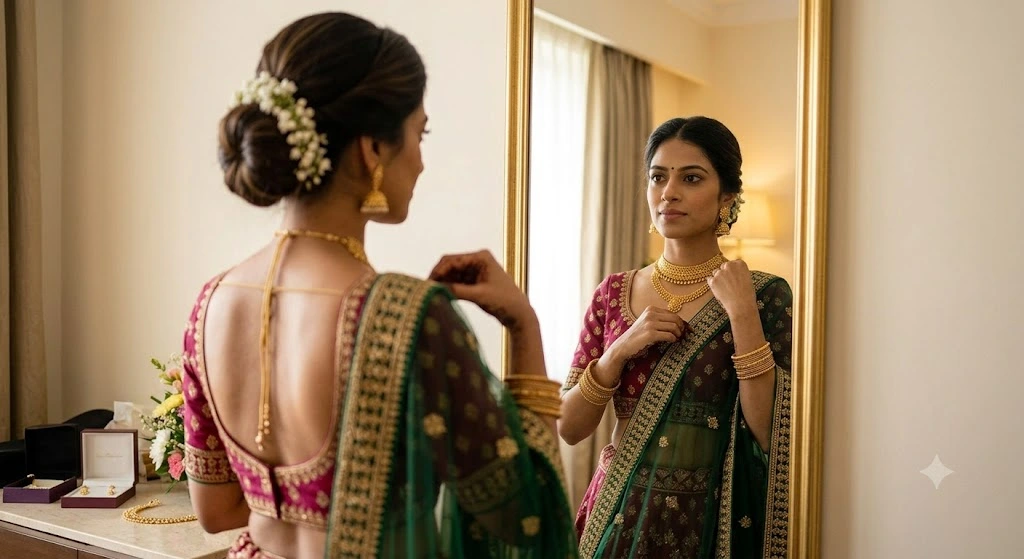
Use the uploaded photo as the main reference for the person's face. Keep the person's identity exactly the same. Do not change the facial structure, eyes, nose, lips, jawline, skin tone, natural marks, or other facial features, whether shown directly or in the mirror reflection. Both the direct view and the mirror reflection of the face should clearly match the uploaded photo.

The subject is a bride standing in front of a tall mirror, with her body turned about three-quarters toward the mirror rather than facing the camera straight on. The camera is placed slightly behind and to the side of her, capturing both her back and shoulder along with her reflection in the mirror ahead of her. Her right hand is raised near her shoulder, gently adjusting the dupatta so it sits properly, with her fingers holding a small fold of the fabric. Her left hand rests lightly near her waist, keeping her posture balanced and natural. Her head is tilted down slightly as she looks at her own reflection, checking how the dupatta falls, giving the photo a candid, in-the-moment feeling rather than a posed look.

In the mirror reflection, her face should be clearly visible, showing a calm and focused expression, with her eyes looking at her own reflection rather than at the camera. This small detail makes the photo feel like a real moment rather than something staged for a picture.

Her hair is styled in a low bun with small flowers or hairpins placed around it, and a few loose strands fall near her neck and ears. Since her back is partly visible, the back of her hairstyle and neckline should look neat and well finished, matching the front view seen in the mirror.

She wears a bridal outfit in a soft pink or maroon shade, with a fitted blouse that has a deep back design, showing delicate embroidery along the spine area. The skirt is heavy and flows outward, catching soft light along its folds. The dupatta, which she is adjusting, has a golden border and a light, flowing fabric that moves naturally with her hand movement, not stiff or frozen looking.

Jewelry includes a layered gold necklace visible in the mirror reflection, small gold earrings, and a set of bangles on both wrists. A thin gold chain sits at the back of her neck, visible from the rear angle, adding detail to the back view of the photo.

The background shows a simple bridal room, with a soft cream or beige wall behind the mirror, and perhaps a small dressing table with a few flowers or jewelry boxes placed neatly to one side, slightly out of focus. The mirror itself may have a thin gold or wooden frame, giving it a slightly elegant, old-style look without appearing too fancy or overdone.

The lighting in the room is soft and warm, likely coming from a lamp or soft ceiling light above, creating gentle highlights on her shoulders, back, and the front of her reflection. The light should be even enough to avoid harsh shadows, giving the whole scene a calm, warm, and slightly nostalgic feeling, similar to natural indoor lighting during the morning of a wedding.

The camera angle is a medium shot that includes her back, part of the mirror frame, and her reflection, creating a layered composition where the viewer can see both angles of the bride at once. The depth of field should keep both the real figure and the mirror reflection reasonably sharp, since both are important parts of the story in this photo, though the background outside the mirror can be slightly softer.

Skin texture in both the direct view and the reflection should look natural, with a light healthy glow rather than an overly smooth or artificial finish. Fabric folds on the dupatta, especially near her raised hand, should look soft and slightly in motion, showing that she is actively adjusting it rather than standing still.

The overall mood of the photo should feel quiet, personal, and a little emotional, like a private moment captured just before stepping out for the wedding. The final image should look like a real behind-the-scenes wedding photo, with natural light, soft fabric movement, and a genuine, unposed feeling created by the mirror reflection and the candid hand gesture.
Bridal Portrait Walking in a Garden
This idea takes the bride outdoors into a garden setting, away from the usual indoor wedding hall look. It shows her walking slowly along a garden path, giving the photo a sense of movement and a softer, more natural mood compared to a still, standing portrait. This kind of photo works well for pre-wedding shoots or outdoor wedding functions.
The pose focuses on gentle walking movement, with one foot slightly ahead of the other and the dupatta or skirt flowing with the motion. Instead of looking straight at the camera, the bride looks slightly to the side, as if enjoying the walk, which gives the photo a relaxed, storytelling feel rather than a stiff, formal pose.
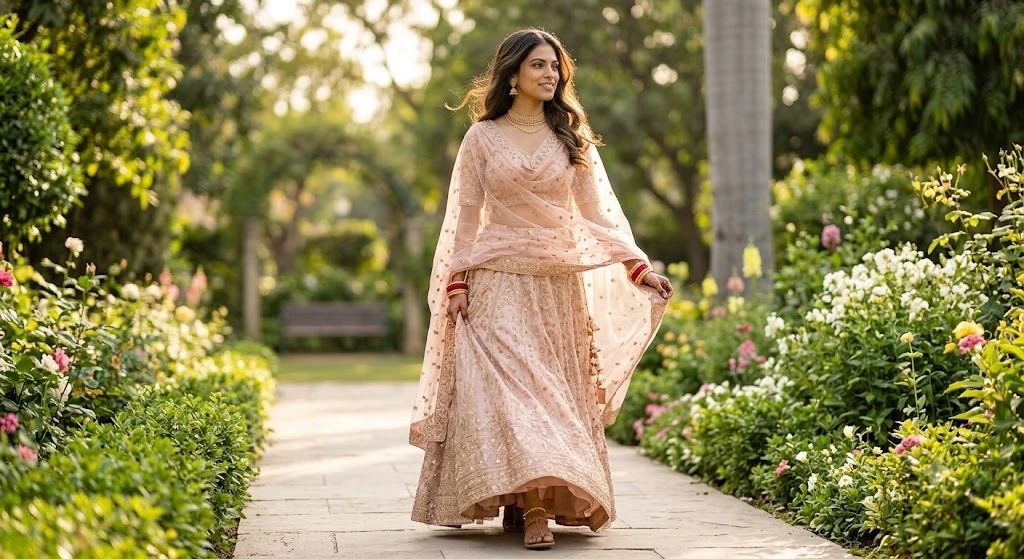
Use the uploaded photo as the main reference for the person. Keep the person's identity exactly the same. Do not change the facial structure, eyes, nose, lips, jawline, skin tone, natural marks, or other facial features. Only change the outfit, background, lighting, and pose as described, while keeping the face fully recognizable and matching the uploaded photo.

The subject is a bride walking slowly along a garden path, captured mid-step so one leg is slightly forward and the other is slightly behind, showing natural walking motion rather than a still standing pose. Her body is turned slightly to one side, three-quarters toward the camera, rather than facing it directly. Her right hand gently holds the edge of her dupatta, lifting it slightly away from her side so it does not drag on the ground, while her left hand hangs naturally, with fingers relaxed and slightly curved rather than stiff. Her head is turned a little to the side, looking toward the garden ahead of her rather than directly into the camera, giving a calm, thoughtful expression, with a small, soft smile on her lips.

Her hair falls in loose waves over her shoulders, with a few strands moving gently as if caught by a light breeze, adding to the feeling of outdoor movement. A small section of hair near the front may be pinned back with a tiny flower or pin, keeping her look neat but still soft and natural.

She wears a lighter bridal outfit suited for an outdoor setting, such as a soft pastel lehenga in shades of blush pink or light gold, with delicate embroidery rather than very heavy work, since a lighter outfit suits outdoor movement better. The skirt flows out slightly with her walking motion, and the dupatta moves gently behind her, catching a bit of the outdoor breeze. The fabric should show natural movement, with soft folds shaped by her walking pose rather than staying perfectly still.

Jewelry stays elegant but not too heavy, including a medium-length gold necklace, small drop earrings, and a few thin bangles on each wrist. A small anklet may be visible near her feet if her footwear allows, adding a nice detail without overcrowding the outfit for an outdoor look.

The location is a well-kept garden, with green trees and bushes lining the path, along with a few scattered flowers in soft colors like white, pink, or yellow. The path itself may be a light stone or gravel walkway, giving a gentle texture beneath her feet. In the distance, blurred greenery and maybe the hint of a small garden structure, like a decorated arch or a bench, can be seen softly out of focus.

The lighting is natural daylight, ideally soft and warm like early morning or late afternoon sunlight, coming from one side and slightly behind her, creating a warm glow around her hair and shoulders while keeping her face softly lit and clear. This kind of lighting, often called a warm backlight, adds a dreamy, gentle quality to the photo without making it too bright or harsh.

The camera angle is a full-body or three-quarter shot, capturing her from around the knees or waist upward, so the walking motion and flowing outfit are both clearly visible. The background should be pleasantly blurred, keeping the focus on the bride while still letting the viewer sense the garden setting around her.

Skin texture should look natural and healthy, with a light outdoor glow rather than heavy makeup shine. Fabric movement, especially in the dupatta and skirt, should look soft and realistic, following the direction of her walking motion and any light breeze, without looking stiff or frozen in place.

The overall mood should feel light, peaceful, and joyful, like a quiet walk taken during a wedding function or a pre-wedding shoot in a beautiful outdoor setting. The final image should look like a real outdoor bridal photo, with soft natural light, gentle fabric movement, and a relaxed walking pose that feels completely genuine rather than stiffly posed.
Pro Tips for a Perfect AI Image
- Always upload a clear, well-lit photo of your face so Gemini can copy your features correctly and keep your identity the same in every bridal look.
- Try each prompt one at a time instead of mixing them, so the pose, outfit, and lighting stay clear and do not get confused in the final image.
- Mention exact outfit colors, like deep red, maroon, or pastel gold, so Gemini does not pick a random shade that does not match what you want.
- If the pose comes out stiff or the hands look strange, ask Gemini to redo the same prompt again, since small changes in hand position can make a big difference.
- Use different prompts from this list instead of repeating the same one, so you end up with a full set of bridal photos that all look different from each other.
- If the background looks too busy or takes attention away from you, ask Gemini to soften or blur it more, so the focus stays fully on the bride.
Trying out these AI bridal photo prompts is a simple way to see yourself in different wedding looks without booking an actual photoshoot. From a traditional red lehenga portrait to a soft golden hour shot near a window, each idea gives you a new mood, pose, and setting to play with, so you get a full bridal album instead of one single style. You do not need any special skills to use these prompts. Just upload a clear photo, copy the prompt that matches the look you want, and let Gemini do the rest. With a little patience and small adjustments here and there, you can build a beautiful set of bridal photos that feel personal, natural, and true to how you actually look.