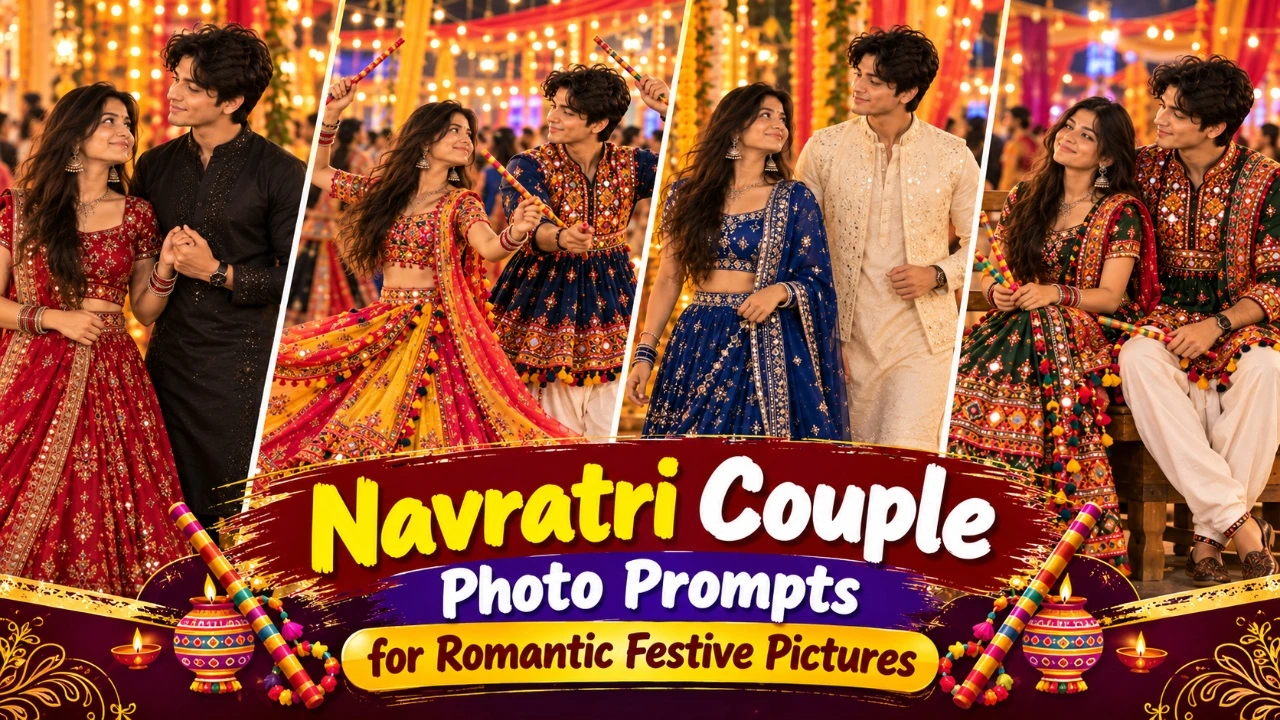

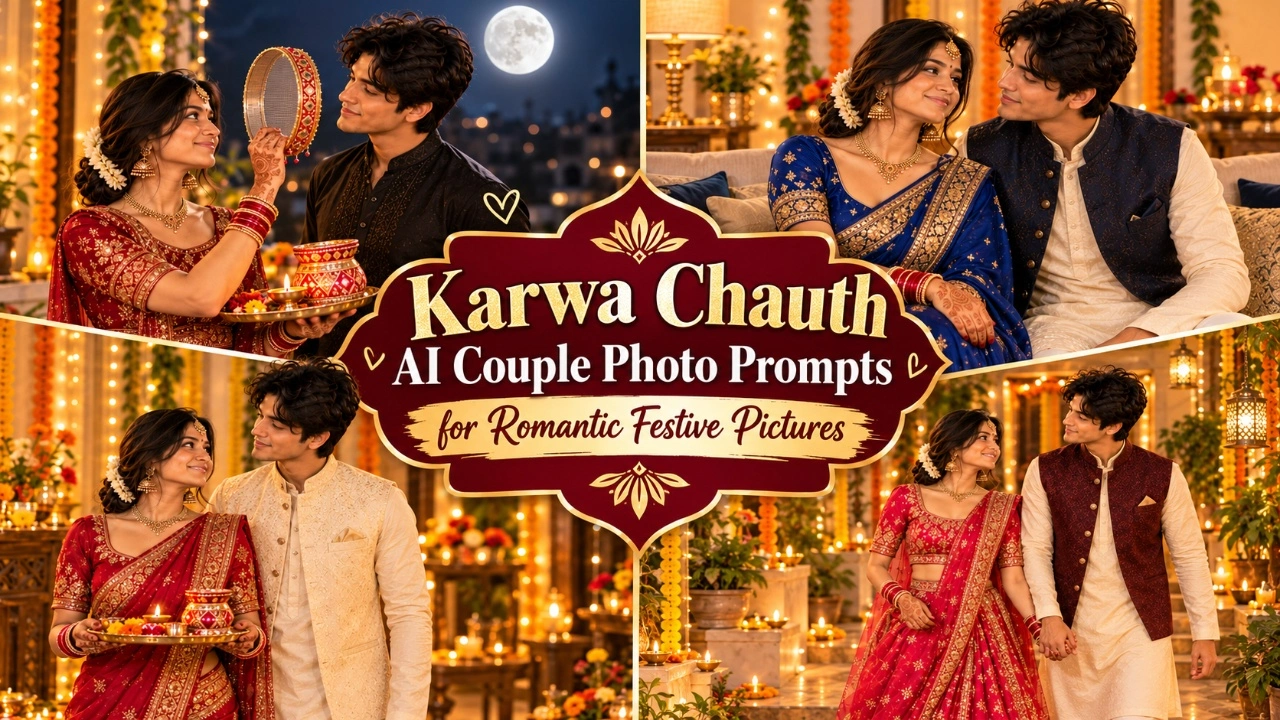
Karwa Chauth is a special festival for married couples. Women wear beautiful sarees, lehengas, bangles, and traditional jewelry to celebrate this day. Couples also take photos during the puja, while looking at the moon, or while spending time together at home. If you want to create these moments using AI, the right photo prompt can help you get the outfit, pose, background, and lighting you want.
These Karwa Chauth AI couple photo prompts include four different photo ideas. You can create a traditional couple portrait, a romantic moon-viewing photo, a seated couple picture, or a candid walking photo. Each idea uses different clothes, poses, and settings. Upload clear photos of both partners to your preferred AI image generator and use the prompts below. You can also change the outfit colors and background to match your preferred style.
1. Traditional Karwa Chauth Couple Photo Prompt
A traditional couple photo is a good choice for Karwa Chauth. The woman can wear a red saree with gold work, red bangles, a maang tikka, and traditional jewelry. The man can wear a cream kurta with a matching jacket. A decorated room with flowers, diyas, and warm lights can make the picture look like it was taken during a real family celebration.
For this photo, the couple stands close together in a natural pose. The woman holds a decorated puja thali while the man gently turns toward her. Both can have soft smiles, with their faces clearly visible. The photo should show their clothes, jewelry, and the festive setting without making the scene look too crowded.
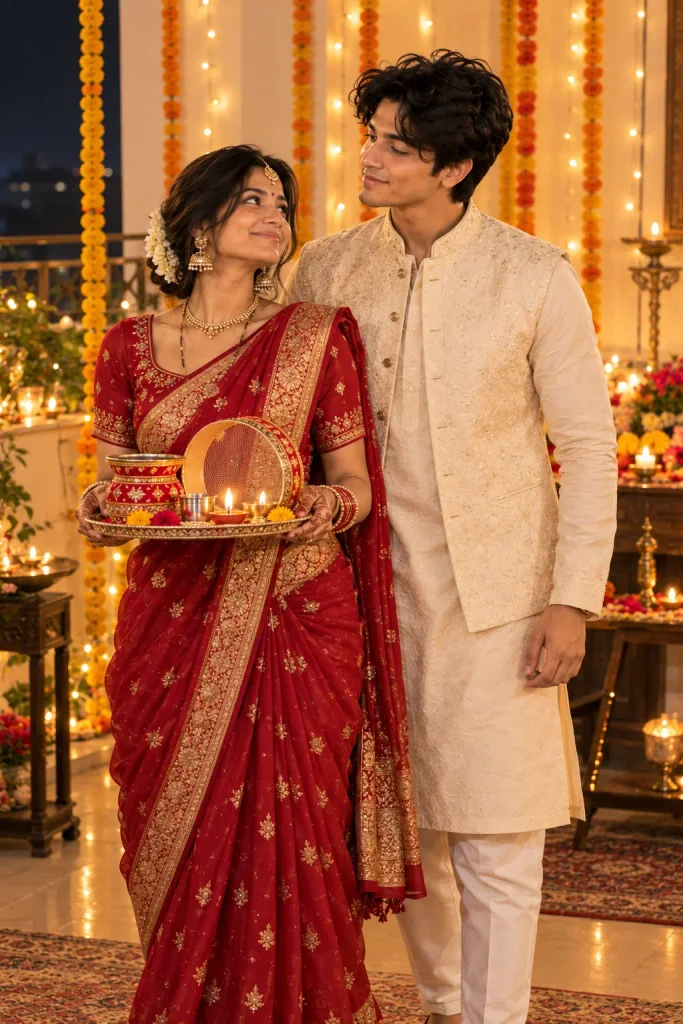
Create a highly realistic Karwa Chauth couple photograph using the uploaded reference photos of both people. The main goal is to create a traditional Indian festive portrait that looks like a real photograph taken by a professional photographer at home. Use the uploaded photos as the main references for the faces and identities of both partners. Keep the woman's face and the man's face true to their original photos. Do not change their facial structure, eyes, nose, lips, jawline, skin tone, natural marks, or other features. Do not replace their faces with those of models or other people. Avoid heavy beauty filters, artificial skin, and changes that make either person difficult to recognize.

Dress the woman in a beautiful deep red silk saree with a golden border and fine gold embroidery. The saree should look like real silk, with natural folds around her waist and legs. Place the pallu neatly over one shoulder, allowing the border to remain visible. Give her traditional red and gold bangles, a gold necklace, matching earrings, a small red bindi, sindoor, and a delicate maang tikka. Add natural-looking mehndi on her hands. Her makeup should be simple and suitable for a family festival. Keep her hairstyle neat, with her dark hair arranged in a low bun or a natural style that matches the reference photo. Do not add extra jewelry that makes the look too crowded.

Dress the man in a well-fitted cream kurta made from a natural-looking cotton or silk fabric. Add a matching Nehru jacket with a simple design and small buttons. Keep the clothing clean and festive without making it look like a wedding outfit. His hairstyle should follow the reference photo, and his facial hair should remain consistent with his real appearance. Do not add a beard, moustache, or hairstyle that changes his identity. His clothes should have realistic folds around the elbows, shoulders, waist, and lower body.

Place the couple inside a warm and neatly decorated Indian home. Use a simple wall in the background with marigold flower strings, a few small brass diyas, and warm fairy lights. Add a decorated table in the background with a small arrangement of flowers. Keep the decorations tasteful and leave enough empty space around the couple. Do not fill every part of the room with objects. The background should support the festive theme without becoming more noticeable than the people.

Ask the woman to stand with her body turned slightly toward the camera. She should hold a traditional puja thali at waist level with both hands. The thali can contain a small diya, a karwa, flowers, and a few traditional puja items arranged neatly. Her fingers should rest naturally around the edge of the plate. Make sure both hands look normal and that the plate is held at a believable angle. Her shoulders should be relaxed, and her head should be turned slightly toward her husband.

Place the man beside her, standing comfortably with his body turned a little toward her. One of his hands may rest naturally by his side while the other remains relaxed near his waist. He should look at the woman with a gentle smile rather than making an exaggerated romantic expression. Keep a small natural gap between their bodies so the clothing remains visible. Their positions should feel comfortable, as if a family member or photographer has asked them to pose for a Karwa Chauth picture.

Use warm indoor lighting that falls softly on both faces. Add gentle light from the diyas and fairy lights, but do not make the entire photograph orange or yellow. The woman's red saree should remain rich and clear, while the man's cream outfit should show its natural fabric texture. Create soft shadows under the chin and around the clothing folds. Avoid harsh flash, overexposed faces, dark eye areas, and unnatural reflections.

Use an eye-level camera angle and a medium-full-body frame. Include both people from around the knees or mid-thigh upward, depending on the composition, so their outfits and the puja thali remain visible. Keep both faces in clear focus. Use a natural portrait lens look, with the couple sharp and the background slightly soft. Do not blur the flowers, jewelry, hands, or important parts of their clothing.

Keep the final colors balanced. Use red, cream, gold, and warm brown as the main colors. The woman's saree should be the strongest color in the photograph, while the man's outfit should provide a calm contrast. The image should feel like a real festive memory, not a painted picture or a heavily edited poster. Maintain normal body proportions, realistic skin texture, natural hair strands, accurate clothing folds, and believable shadows.

The puja thali should look like a real object with a clear round shape and properly placed items. Do not add extra fingers, duplicate hands, bent wrists, floating objects, or impossible hand positions. Make sure the woman's jewelry sits naturally on her neck and ears. Keep the man's jacket aligned with his shoulders and torso. Do not add random objects to their hands.

The final result should be a clean, high-quality Karwa Chauth couple portrait that shows tradition, comfort, and togetherness. Both people should look like themselves, their clothes should fit naturally, and the festive decorations should remain realistic. Do not add text, captions, logos, borders, stickers, or watermarks. Do not create a collage. Generate one complete photograph with both partners in the same scene.
2. Romantic Karwa Chauth Moon-Viewing Photo Prompt
The moon-viewing moment is one of the most popular scenes for Karwa Chauth couple photos. The woman can wear a maroon lehenga or red saree, while the man wears a black kurta. A decorated balcony, a bright moon, and a few warm lights can create a night-time setting that matches the festival.
In this photo, the woman holds a traditional sieve and a puja thali while looking toward her husband. He stands in front of her and looks back at her. Their natural expressions and the space between them should make the moment feel real. The moon and decorations should be visible in the background without taking attention away from the couple.
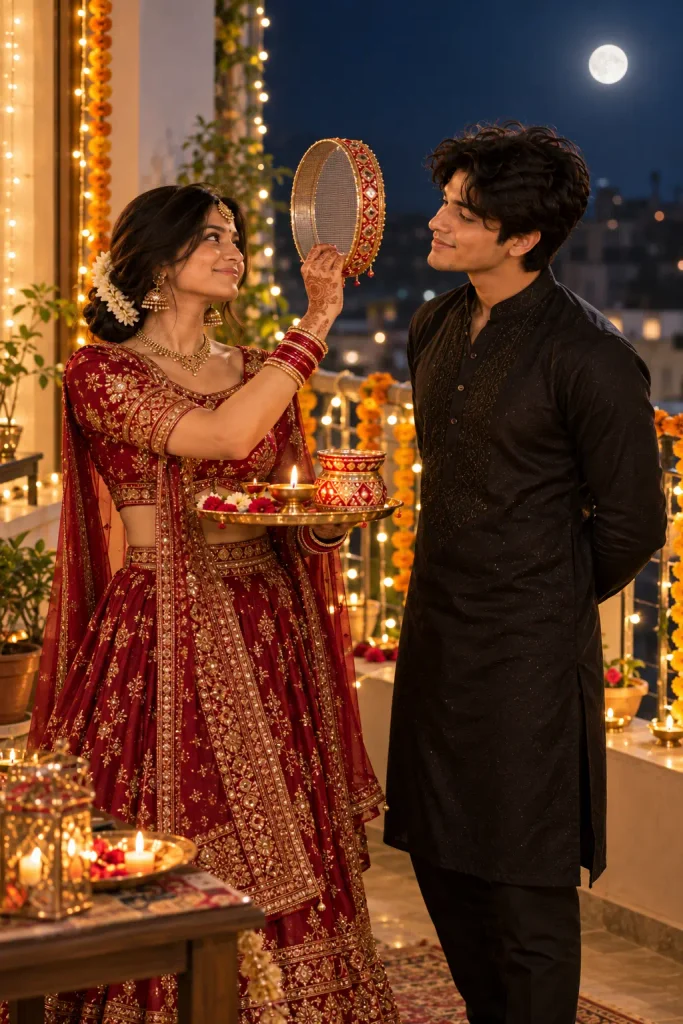
Create a realistic night-time Karwa Chauth couple photograph using the uploaded reference photos of both partners. Show a married Indian couple sharing a traditional moon-viewing moment on a decorated balcony. Keep the original identity of both people from the reference images. Do not change their faces, eye shapes, nose, lips, jawline, skin tone, or natural facial marks. Do not create new faces or make them look like unrelated people. Avoid excessive face smoothing, artificial beauty effects, and changes to their age or natural appearance. Both partners should remain clearly recognizable.

Dress the woman in a deep maroon lehenga with fine golden embroidery. The blouse should have a matching design, a natural fit, and realistic sleeve details. Add a matching dupatta placed over one shoulder and arranged neatly around her body. The lehenga should have natural folds and a believable weight. Include traditional gold earrings, a maang tikka, a necklace, red bangles, sindoor, and a small red bindi. Add mehndi on her hands, with natural patterns that do not look like random dark marks. Keep her makeup suitable for an evening family celebration. Her hairstyle should follow the reference photo as closely as possible while fitting the traditional outfit.

Dress the man in a black kurta with a clean, simple design. The fabric should have a slight natural shine under the balcony lights, but it should not look like plastic. Add a subtle collar and realistic buttons. Keep his sleeves and shoulders fitted naturally. Do not add unnecessary chains, sunglasses, or accessories. His hairstyle and facial hair should match the reference photo. The outfit should look festive but simple enough to keep the woman's traditional clothes and the moon-viewing moment as the main focus.

Set the scene on an Indian home balcony at night. Include a railing, a few flower strings, small hanging lights, and a small table with traditional festival items. The decorations should look like they were placed by a family for Karwa Chauth. Keep the balcony tidy and realistic. Show a dark blue night sky beyond the railing, with a clear full moon visible in the distance. The moon should look natural in size and brightness. Do not make it enormous or place it too close to the couple.

Position the woman facing her husband. She should hold a traditional sieve in one hand and a decorated puja thali in the other. The sieve should be held at a comfortable height near her face, without completely hiding her eyes. The thali should remain level and supported by her other hand. Her elbows should bend naturally, and her fingers should wrap around the objects correctly. Make the sieve look like a real household item, with a clear frame and a visible mesh pattern.

Place the man directly in front of her but slightly to one side, leaving enough space between them for both bodies and faces to remain visible. He should stand upright with relaxed shoulders and look toward her with a gentle expression. His hands should rest naturally near his waist or by his sides. Do not make him hold an unrelated object. The woman should look toward him through or around the sieve in a natural way. Their eye directions should match the interaction, and neither person should look away without a clear reason.

Create a quiet and personal mood. The scene should feel like a real moment during the Karwa Chauth ritual rather than a staged fashion shoot. Keep the couple's expressions calm and affectionate. Avoid exaggerated smiles, dramatic crying, or poses that look uncomfortable. Their body positions should show that they are focused on the ritual and on each other.

Use a mix of soft moonlight and warm balcony lighting. Let the moonlight create a cool blue tone in the background while warm lights softly brighten the couple. The light on their faces should remain balanced so their natural skin tones are clear. Add gentle shadows around the clothing and small highlights on the woman's jewelry. Do not make the gold items glow unnaturally. Avoid strong orange color casts, very dark faces, and bright spots that remove facial details.

Use a three-quarter camera view from slightly to the side of the couple. The frame should include both people from the waist or mid-thigh upward, depending on how the sieve and thali fit in the scene. Keep their faces sharp and the moon visible in the background. Use a natural portrait photography look with a softly blurred background. The balcony railing and lights should remain recognizable without becoming too sharp or distracting.

Pay attention to the small details. The woman's bangles should sit naturally on her wrists. The necklace should rest against her clothing rather than float above it. The man's kurta should have realistic folds around the arms and waist. The sieve must not merge with her face or hair. The thali should not bend, and the objects on it should remain in place. Both people should have normal hands, five fingers on each visible hand, natural wrists, and realistic body proportions.

Keep the main colors maroon, black, gold, and deep blue. The woman's outfit should stand out against the man's dark kurta and the night sky. The warm lights should create a festive feeling without hiding the natural colors. The image should have realistic skin texture, natural hair, detailed fabric, and believable reflections from the lights.

The final photograph should look like a real Karwa Chauth memory captured by a skilled photographer. It should show the traditional moon-viewing ritual, the couple's natural interaction, and the decorated balcony in one clear scene. Do not add text, captions, logos, watermarks, borders, or stickers. Do not create multiple panels or a collage. Generate one complete, realistic photograph and keep both people's original identities intact.
3. Karwa Chauth Couple Sitting Together Photo Prompt
A sitting couple photo is a good choice for anyone who wants a calm and simple festive picture. The woman can wear a royal blue saree with a gold border, while the man wears an ivory kurta with a dark blue jacket. A decorated sofa, flowers, diyas, and warm lights can make the room look ready for the festival without making it too busy.
For this idea, both partners sit beside each other on a sofa. The woman rests her hands naturally on her lap, showing her bangles and mehndi, while the man turns slightly toward her. They can look at the camera with relaxed smiles. This pose is different from a standing portrait and works well for a family-style Karwa Chauth photo.
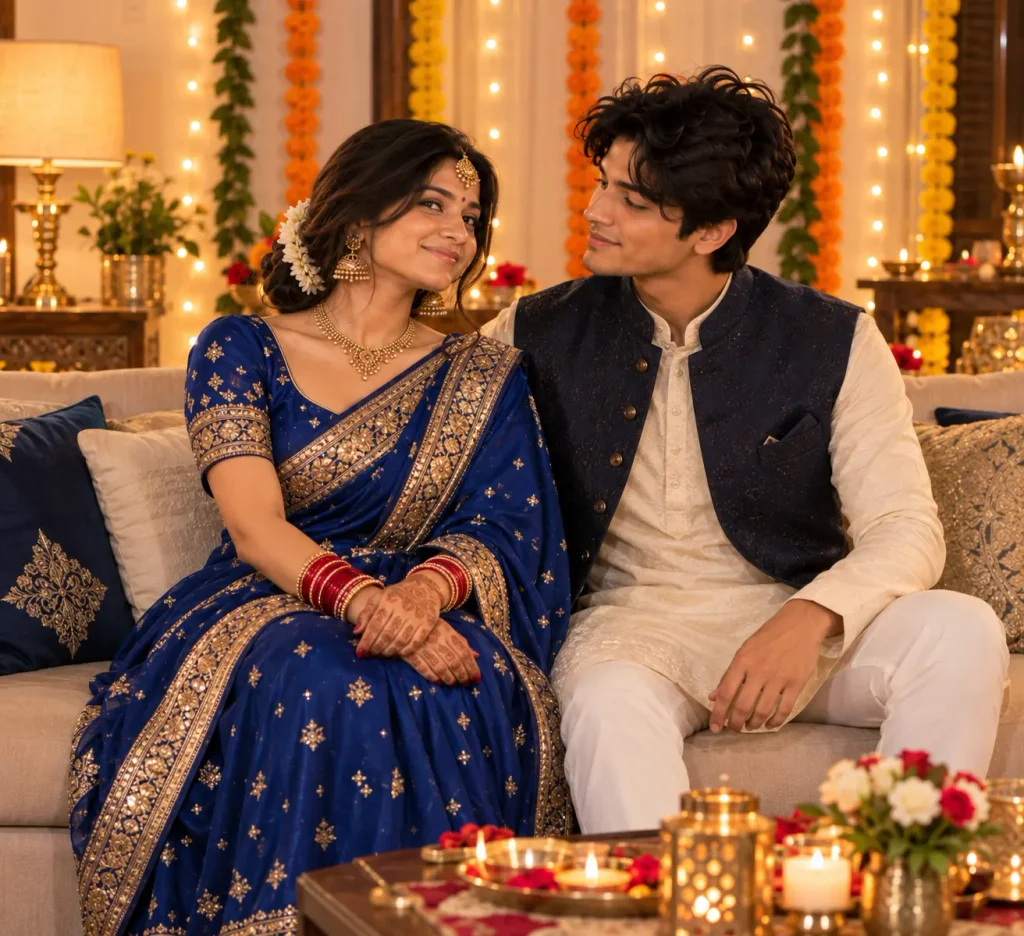
Create a realistic Karwa Chauth couple photograph using the uploaded reference photos of both partners. Show the couple sitting together on a sofa in a warmly decorated Indian home. The image should look like a real festive photograph taken indoors, not a digital painting or fashion poster. Use the uploaded photos to keep both people's identities unchanged. Match their original facial structure, eyes, nose, lips, jawline, skin tone, hairline, and other visible features. Do not replace their faces with new faces, change their age, or apply strong beauty filters. Keep their expressions natural and their body proportions realistic.

Dress the woman in a royal blue silk saree with a gold border and small golden details. The saree should fall naturally over her shoulder and lap, with realistic fabric folds where she sits. The blouse should match the saree and fit comfortably. Add traditional gold earrings, a necklace, red and gold bangles, sindoor, a small bindi, and a maang tikka. Include natural mehndi on the visible parts of her hands. Her makeup should be neat and light enough to keep her real facial features clear. Style her hair in a way that suits the reference photo, without changing her natural hairline or length unnecessarily.

Dress the man in an ivory kurta with a dark blue Nehru jacket. The kurta should have a simple collar, realistic buttons, and natural folds around his waist and elbows. The jacket should fit his shoulders and body without looking too tight. Keep his shoes out of the main frame unless they naturally appear. His hairstyle, beard, moustache, and skin tone should remain consistent with the reference photo. Avoid adding random jewelry or accessories. His clothes should look clean and festive while matching the woman's blue and gold outfit.

Place the couple on a comfortable sofa with a simple design. Use cushions in cream, blue, or muted gold to match their clothes. Behind the sofa, add a few marigold flower strings, a small arrangement of flowers, and warm fairy lights. Place one or two brass diyas on a nearby table. A small puja thali may sit on the table, but it should not block the couple or become the main subject. Keep the room tidy and realistic, with enough open space around the people. Avoid an overly decorated background full of objects.

Position the woman sitting upright but comfortably on one side of the sofa. Her back should rest naturally against the cushion, and her shoulders should remain relaxed. Place both hands together on her lap, with one hand resting gently over the other. This should allow her bangles and mehndi to remain visible. Her knees and lower body should follow a natural seated position beneath the saree. Do not make her legs appear twisted or place her hands in an awkward position.

Place the man sitting beside her with his body turned slightly toward the woman while his face remains directed toward the camera. One hand can rest naturally on his thigh, while the other rests on the sofa cushion near his side. His elbows should remain relaxed. Leave a comfortable amount of space between their bodies, but make their closeness clear. Do not make him lean too far forward or stretch his arm around her in an unnatural way. Their pose should look like a simple picture taken at home during a family celebration.

Both people should have soft, natural smiles. Their eyes should look toward the camera, and their heads should remain at comfortable angles. Avoid identical artificial smiles or expressions that look copied from a fashion advertisement. The woman should look calm and happy, while the man should have a relaxed expression. Their faces must remain the main focus of the photograph.

Use soft indoor lighting that comes from the front and slightly from one side. The light should brighten both faces evenly without removing natural shadows. Keep the blue saree rich in color, the gold border clear, and the ivory kurta close to its natural shade. The background lights may create a warm glow, but they should not make the room look orange. Add gentle shadows beneath the chin, around the sofa cushions, and along the clothing folds.

Use an eye-level camera angle and a medium-wide frame. Show both people from around the knees or mid-thigh upward, depending on the sofa and composition. Keep their faces, hands, bangles, and main clothing details visible. The sofa should appear large enough for two adults to sit naturally. Use a portrait photography style with a softly blurred background, while keeping the main decorations recognizable.

Pay attention to the woman's jewelry and hands. The bangles should follow the shape of her wrists, and the mehndi should appear on the skin rather than on the clothing. Her necklace should sit naturally against the saree. The man's hands should have normal finger lengths and believable positions. Make sure neither person's arms merge with the sofa or with each other. Avoid extra fingers, missing fingers, duplicate limbs, distorted jewelry, and fabric that passes through the body.

Keep the main colors royal blue, ivory, gold, and warm brown. The color balance should feel natural and suitable for an Indian home during Karwa Chauth. Do not oversaturate the blue saree or make the gold details shine like metal foil. Keep skin texture natural, hair detailed, and clothing realistic. The photograph should feel personal and comfortable rather than overly posed.

The final result should be a high-quality seated couple portrait that shows their traditional clothes and a simple festive setting. Both people must remain recognizable from their uploaded photos. Keep the scene believable, with natural sitting positions, realistic lighting, and a clean background. Do not add text, captions, logos, watermarks, borders, or stickers. Do not create a collage or split-screen image. Generate one complete photograph with both partners sitting together on the same sofa.
4. Karwa Chauth Couple Walking Hand in Hand Photo Prompt
A walking couple photo gives a different look from traditional portraits. The woman can wear a pink and red lehenga, while the man wears a beige kurta with a maroon jacket. A decorated courtyard with flower strings and warm lights can provide a festive background. This idea works well for couples who want a photo that feels natural rather than carefully posed.
For this picture, the couple walks side by side while holding hands. The woman turns her head toward her husband, and he looks back at her with a gentle smile. Their clothes should move naturally as they walk. A full-body camera view can show the lehenga, kurta, footwear, and decorated path in one frame.
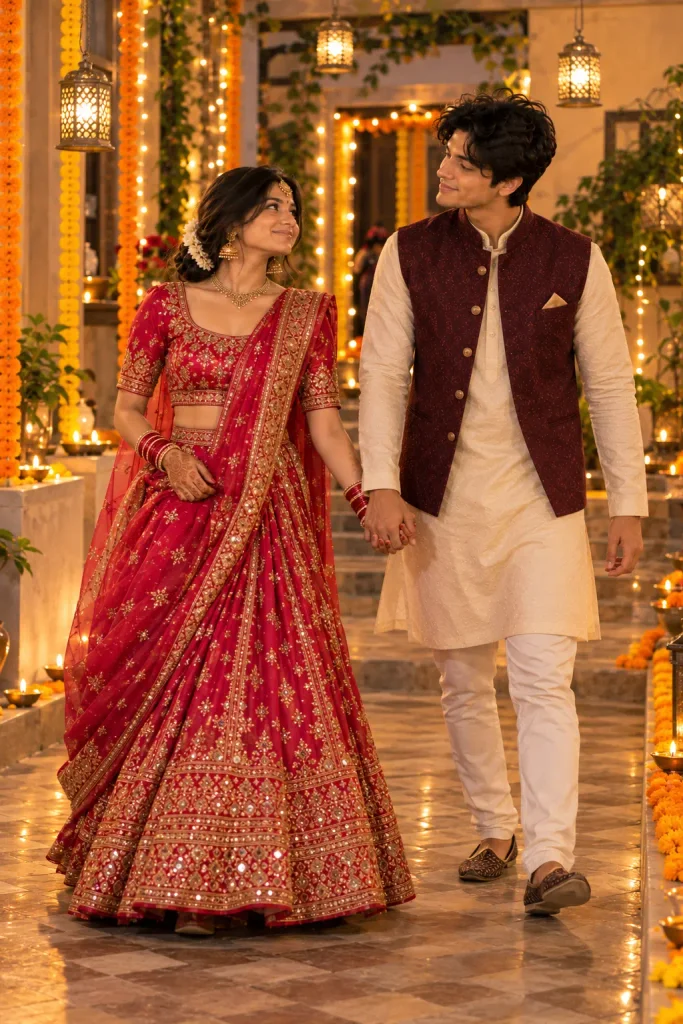
Create a photorealistic Karwa Chauth couple photograph using the uploaded reference photos of both partners. Show the couple walking hand in hand through a decorated Indian courtyard during the evening. The photo should look like a real moment captured by a photographer while the couple is moving naturally. Keep both people's original identities from their reference photos. Do not change their faces, eyes, noses, lips, jawlines, skin tones, natural marks, or other facial features. Do not make either person look like a different model. Avoid artificial skin smoothing, face replacement, and exaggerated beauty effects.

Dress the woman in a pink and red lehenga with golden embroidery. The lehenga should have a full skirt that falls naturally around her legs as she walks. Add a matching blouse with realistic stitching, sleeves, and a comfortable fit. Place a dupatta over one shoulder, with part of it falling naturally behind her. The fabric should show gentle movement rather than flying dramatically through the air. Add traditional earrings, a maang tikka, red bangles, a necklace, sindoor, and a small red bindi. Include visible mehndi on her hands. Keep her hairstyle close to the reference photo and suitable for the outfit. Her makeup should look natural and should not hide her real features.

Dress the man in a beige kurta with a maroon Nehru jacket. The kurta should have a simple collar and natural fabric folds around the waist, arms, and knees. The jacket should fit his shoulders correctly and have a few small buttons. Add simple traditional footwear if his feet are visible. Keep his hairstyle, beard, moustache, and other facial details consistent with the uploaded reference photo. Avoid adding sunglasses, large chains, or unrelated accessories. The beige and maroon colors should match the woman's pink and red outfit without making the couple look dressed in exactly the same clothes.

Set the scene in a clean courtyard outside an Indian home. Use a decorated walkway with marigold flower strings, a few hanging lanterns, warm fairy lights, and small diyas placed safely along the sides. Add a simple wall or doorway in the background, with subtle festive decorations. The courtyard should look like a real place where a family is celebrating Karwa Chauth. Avoid a palace, an unrealistic garden, or a crowded wedding stage. Leave enough open space around the couple so their full bodies remain visible.

Show the couple walking forward along the decorated path. Their hands should meet naturally between them, with the woman's hand gently holding the man's hand. Both arms should hang at comfortable angles. The woman should be in the middle of a natural walking step, with one foot slightly ahead of the other. Her skirt should move gently with her steps. The man should also be walking with one foot forward and his body balanced naturally. Their legs and feet must match the direction of movement.

The woman should turn her head toward the man while walking, with a small natural smile. The man should turn his face toward her and return the smile. Their bodies should still face mostly forward, so the photo captures the walking movement rather than making them stand still. Do not twist their necks too far or make their bodies face opposite directions. Keep their interaction simple and comfortable, like a candid moment during a festive evening.

Use a full-body camera frame that includes their heads, outfits, legs, and footwear. The camera should be positioned around eye level or slightly lower, with enough distance to capture the walking pose. Do not crop off their feet or cut through their heads. Keep both people near the center of the frame, with the decorated path leading into the background. Their faces should remain clear even though they are moving.

Use warm evening lighting from the hanging lanterns and fairy lights. The light should fall softly on their faces and clothes, with gentle shadows around their legs and beneath the lehenga. Keep the pink and red outfit colors clear, the beige kurta natural, and the maroon jacket rich but not too dark. The background lights can create a soft glow, but they should not cover the couple's faces or turn into large bright circles. Avoid harsh flash and unrealistic color effects.

The image should have the look of a professional candid photograph. Use natural depth of field, with the couple in sharp focus and the distant decorations slightly soft. Keep the walkway and background visible enough to show the festive setting. The photo should feel like a real moment, not a fashion advertisement. Do not add excessive blur, artificial motion trails, or dramatic effects that make the clothes or faces unclear.

Pay close attention to the couple's joined hands. Their fingers should fit naturally around each other, with realistic hand sizes and wrist positions. Do not create extra fingers, merged hands, or disconnected arms. The woman's dupatta should follow the direction of her movement and should not pass through her body. Her skirt should fall around her legs without hiding an impossible body position. The man's jacket and kurta should move naturally with his walking step.

Keep the decorations simple and balanced. The marigold strings should hang naturally, the lanterns should have believable shapes, and the diyas should rest on the ground or on safe surfaces. Avoid adding too many people in the background. If distant family members are included, keep them small and out of focus so they do not distract from the main couple. The background should support the story of Karwa Chauth without taking attention away from the two people.

Keep the main color palette pink, red, beige, maroon, and warm gold. The colors should look rich but natural. Use realistic skin texture, natural hair strands, accurate clothing folds, and normal body proportions. Keep both partners recognizable from their reference photos, even when their heads are turned slightly toward each other.

The final image should show a married couple enjoying a peaceful festive moment while walking hand in hand. Their pose should look natural, their clothes should fit correctly, and the courtyard should clearly feel like a Karwa Chauth celebration. Generate one complete, high-resolution photograph. Do not add text, captions, logos, watermarks, borders, stickers, or a collage layout.
Pro Tips for a Perfect AI Image
- Upload clear photos of both partners so the AI can follow their faces more closely.
- Mention the exact outfit colors, jewelry, and pose you want in each prompt.
- Use different poses, such as standing, sitting, moon-viewing, and walking, to create varied photos.
- Describe the background clearly, including the balcony, sofa, flowers, or festive lights.
- If the hands or puja items look wrong, generate the image again with clearer instructions.
- Ask the AI to keep both people’s original facial features and natural skin tones.
Karwa Chauth photos can show many different moments, from traditional puja scenes to romantic moon-viewing pictures. These four prompts help you create different couple photos with new poses, outfits, and backgrounds. Choose the style that suits you and upload clear reference photos for better results. You can also change the colors and decorations to match your own Karwa Chauth look.